
Basement flooding
Weeping Tile Replacement Cost: Interior vs Exterior
Weeping tile replacement cost depends on access, depth, length and where the water ends up; no public body publishes a Toronto price range, but the City pays 80% up to $400 to sever and cap drains.
On this page
Key takeaways
- No government or standards body publishes a weeping tile replacement price for Toronto, so this page explains the cost drivers instead of quoting a range.
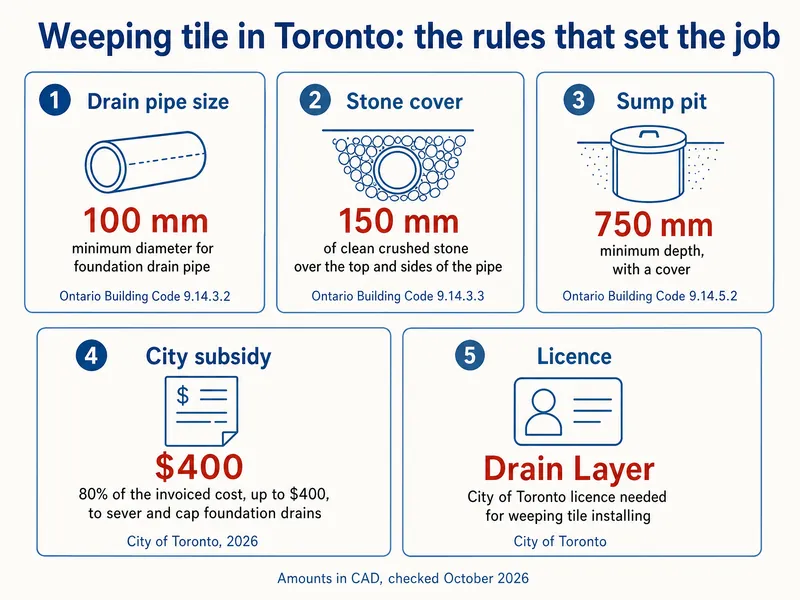
- The Ontario Building Code (2024) sets the basics: drain pipe at least 100 mm across, covered by at least 150 mm of clean crushed stone.
- Foundation drains must empty to a sewer, a drainage ditch or a dry well; where gravity drainage is not practical, the Code calls for an automatic sump pump.
- The City's Basement Flooding Protection Subsidy Program pays 80% of the invoiced cost, up to $400, to sever and cap foundation drains from the City sewer (as of October 2026).
- Anyone doing "weeping tile installing" in Toronto needs a City Drain Layer licence.
- The full subsidy across all eligible flood-protection work is capped at $6,650 per property for work done on or after November 12, 2025.
How much does weeping tile replacement cost?
Weeping tile replacement cost in Toronto has no official benchmark: the City, Ontario and federal housing agencies do not publish a per-metre or per-job figure, and this guide does not repeat contractor price lists. What can be said with sources is which rules shape the job and which part the City will help pay for. All amounts here are in Canadian dollars (CAD) and current as of October 2026.
The one City figure that applies is the foundation drain severance and capping subsidy: 80% of the invoiced cost up to $400, including labour, materials and taxes. On a $400 invoice the City pays $320; on a $500 invoice or more, it pays the full $400. That subsidy covers only cutting the drain off from the City sewer, not digging up and replacing the tile itself.
Quotes vary by home, so the practical step is to get two or three written, itemized quotes that describe the same scope. The sections below explain what that scope should spell out.
What is weeping tile?
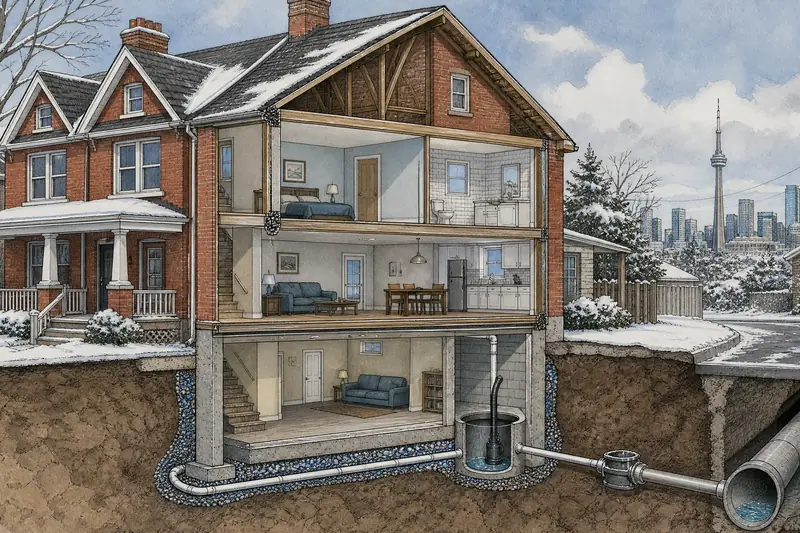
Weeping tile is the perforated drain pipe laid around the bottom of a foundation to carry groundwater away before it pushes through the wall or floor. Older Toronto houses often have clay tile; newer systems use plastic pipe. The Ontario Building Code calls it foundation drainage and, in Article 9.14.2.1, requires drainage "at the bottom of every foundation wall that contains the building interior" unless it can be shown to be unnecessary.
The Code sets the minimums any replacement has to meet. Drain tile or pipe must be at least 100 mm in diameter (9.14.3.2). It is laid on undisturbed or compacted soil so its top sits below the bottom of the floor slab, with at least 150 mm of crushed stone over the top and sides (9.14.3.3). The water then has to go to "a sewer, drainage ditch or dry well" (9.14.5.1), and a dry well must sit at least 5 m from the foundation (9.14.5.3).
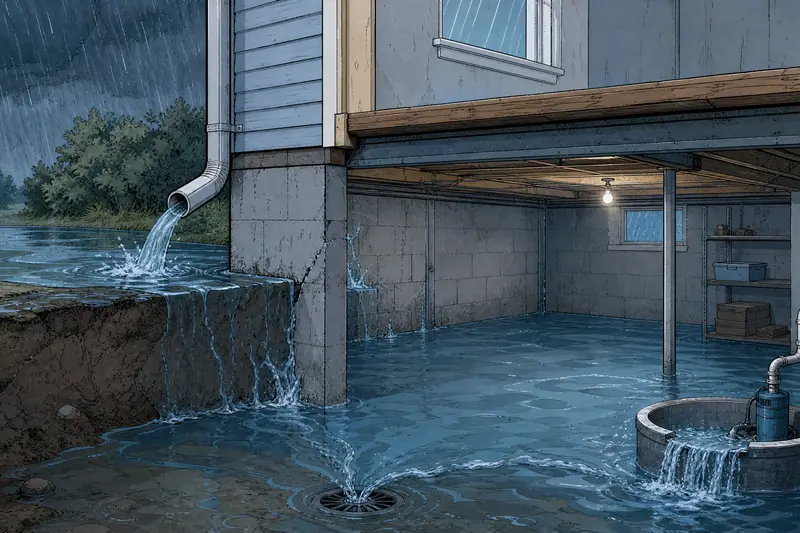
In many older Toronto homes the weeping tile was connected to the City's sewer. During heavy storms that connection can let sewer water push back toward the basement, which is why the City subsidizes severing and capping it.
How do you know weeping tile has failed?
No public agency publishes a checklist that proves weeping tile has failed, so treat these as signs that call for an inspection rather than a diagnosis. Common ones are water seeping where the basement wall meets the floor after rain, damp patches low on the walls, a sump pump that runs far more or far less than it used to, and water that appears soon after downspouts overflow. Several of these have simpler causes, such as poor grading or a blocked eavestrough.
A drain contractor can run a camera through the tile from a cleanout or the sump pit to look for collapsed sections, roots or silt. That inspection is worth getting in writing before agreeing to a full replacement. The City's own 2026 flood-readiness infographic lists cheaper fixes first: clearing eavestroughs, correcting grading so water moves at least 2 m from the foundation, and sealing leaks in windows and foundations.
If water is already coming in, the basement waterproofing cost guide explains how those fixes fit with larger work.
Interior or exterior weeping tile: what is the difference?
Exterior weeping tile sits outside the foundation at footing level; interior weeping tile is laid inside the basement, just under the floor slab, and drains to a sump pit. Both must meet the same Code minimums for pipe size and stone cover. The choice changes where the digging happens, and that is the biggest single factor in price.
| Feature | Exterior weeping tile | Interior weeping tile |
|---|---|---|
| Where the pipe goes | Outside, beside the footing | Inside, under the edge of the basement floor slab |
| Digging | Excavation down to the footing around the house | Floor slab cut and removed along the walls |
| Wall treatment | Wall can be cleaned, repaired and membraned while exposed | Water is collected after it reaches the wall |
| Where water goes | Sewer connection (often severed in Toronto), dry well or sump pit | Almost always a sump pit and pump |
| Main disruption | Gardens, walkways, decks, driveways | Finished basement walls and floors |
| Code reference | Ontario Building Code 9.14.2 to 9.14.5 | Ontario Building Code 9.14.2 to 9.14.5 |
Exterior work lets a contractor repair cracks and apply a waterproofing membrane while the wall is exposed. Ontario's Code requires waterproofing, not just dampproofing, "where hydrostatic pressure occurs" (Article 9.13.3.1). Interior systems avoid the yard but lose basement finishes along the perimeter. On semi-detached and row houses, a shared wall can make one side impossible to dig from outside.
What drives weeping tile replacement cost?
Six things move weeping tile replacement cost more than anything else: the length of foundation to be done, depth to the footing, access, what has to be removed and put back, where the water will discharge, and permits and licences. A written quote should price each of these separately.
- Length and depth. A full perimeter on a detached house is a different job from one wall of a semi. Deeper basements mean more digging and more stone.
- Access. Porches, driveways, side yards narrower than a small excavator, and neighbouring foundations all add hand digging or shoring.
- Restoration. Interlock, concrete walks, decks, landscaping, or basement drywall and flooring have to come out and go back.
- Discharge. If the old tile went to the City sewer, severing and capping it usually means adding a sump pit and pump. The Code requires an automatic pump "where gravity drainage is not practical," and a sump pit at least 750 mm deep with a cover (9.14.5.2). The sump pump cost guide covers that part.
- Wall work. Crack repair and a membrane on an exposed exterior wall add materials and time.
- Permits and fees. Toronto Building decides whether your project needs a permit. Its fee schedule lists $214.79 for repair or replacement of buried plumbing and drainage piping in a single-family home and $38.67 for each sump with a pump (2026), subject to the schedule's $214.79 minimum for all work; confirm the total with Toronto Building. See the Toronto plumbing permit guide.
Ask each contractor which licence they hold. The City requires a Drain Layer licence for anyone doing "weeping tile installing" or drain repair, and subsidy funding is denied if the contractor lacks a valid City business licence.
Does the City subsidy cover any of it?
The City subsidy covers one part of a weeping tile job: severing and capping the foundation drain connection to the City sewer, at 80% of the invoiced cost up to $400. Replacing or adding the tile itself is not a listed subsidy item. The amounts below apply to work completed on or after November 12, 2025, under the program page modified June 18, 2026.
| Eligible item | City pays (80% of invoice, up to) | Limit |
|---|---|---|
| Foundation drain severance and capping | $400 | Unchanged from the older program |
| Sump pump | $2,250 | One device |
| Sump pump battery backup | $300 | New in 2026 |
| Backwater valve | $1,600 per valve | Up to two valves |
| Home plumbing assessment | $500 | One time |
| Whole property | $6,650 | Lifetime cap per item applies |
To qualify, the owner's downspouts must be disconnected from the City sewer (or exempted), the work must be done by contractors holding a valid City business licence, and the application goes in within two years of the work. For drain severance, the City's contractor table lists Plumbing, Plumbing and Heating, and Drain licences as eligible. The downspout disconnection guide covers the first condition, and the backwater valve guide explains the other main protection that pairs with drain work.
Weeping tile figures that apply in Toronto
- 100 mmMinimum diameter of foundation drain pipeOntario Building Code (2024), 9.14.3.2
- 150 mmMinimum crushed stone over the top and sides of the pipeOntario Building Code (2024), 9.14.3.3
- $400City subsidy cap to sever and cap foundation drains (80% of invoice)City of Toronto, modified June 18, 2026
- $6,650Maximum City flood-protection subsidy per propertyCity of Toronto, modified June 18, 2026
- $495.12City Drain Layer licence fee, application plus licenceCity of Toronto, modified July 14, 2026
How we put this page together
This page is based on the Ontario Building Code (2024 compendium, Part 9, Sections 9.13 and 9.14), the City of Toronto's Basement Flooding Protection Subsidy Program page (modified June 18, 2026), the City's 2026 basement flooding infographic, the Drain Layer licence page (modified July 14, 2026) and Toronto Building's 2026 permit fee schedule, all checked in October 2026. Contractor price lists and per-metre estimates were left out because no public body publishes them, and the warning signs are described as reasons to inspect, not a diagnosis.
Common questions
Does weeping tile have to be replaced if it is clay?
Not automatically. Clay tile that still drains can stay; the question is whether a camera inspection shows collapse, roots or silt. Ask for the inspection footage and a written finding before agreeing to replacement.
Can a homeowner replace weeping tile without a licence?
The City's Drain Layer licence applies to "an individual who does drain laying, weeping tile installing" and related work, which is aimed at people doing it as a trade. If you plan any of this work yourself, ask Toronto Building about permits first; for subsidy claims, the work must be done by a contractor with a valid City business licence.
Is it cheaper to do only the wall that leaks?
Doing one wall is a smaller job, but it only helps if the problem is limited to that wall. A camera inspection and a look at grading and downspouts on that side help decide whether a partial repair makes sense.
Does severing the foundation drain mean the house needs a sump pump?
Usually, because the groundwater still needs somewhere to go. The Ontario Building Code says foundation drains go to a sewer, ditch or dry well, and calls for an automatic sump pump where gravity drainage is not practical. The City subsidizes a sump pump separately, up to $2,250.
How long does the City take to pay the $400 subsidy?
The City says applications can take up to 10 weeks to process and are handled first-come, first-served, subject to Council funding. Keep the original itemized invoice marked paid in full.
What should a weeping tile quote list?
Length of foundation, interior or exterior method, depth, pipe type and size, stone, membrane or crack repair, sump pit and pump, sewer severance, restoration of finishes or landscaping, permit, the contractor's City licence number, and the warranty in writing.
Will insurance pay for new weeping tile?
That depends entirely on your policy wording. The Insurance Bureau of Canada notes that sewer backup cover is usually optional, so read your policy and ask your insurer or broker; the sewer backup insurance guide explains the terms.
Related guides
More help: see our Toronto water and plumbing guide.