
Basement flooding
Sewer Backup Insurance: What It Covers in Ontario
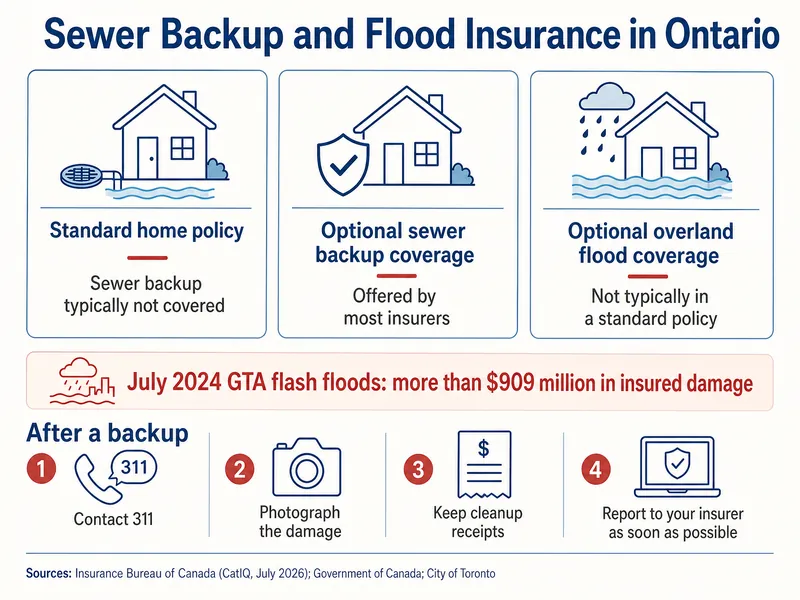
Sewer backup insurance is optional coverage you add to an Ontario home policy; the Insurance Bureau of Canada says sewer backup damage is typically not covered by a standard policy.
On this page
Key takeaways
- The Insurance Bureau of Canada (IBC) says damage from sewers and drains backing up "is typically not covered by a standard policy", and that optional sewer backup coverage "is offered by most insurers".
- IBC also says basement water from a sewer backup "is only covered if you have purchased specific, optional sewer backup coverage" (Flooding and insurance).
- Overland flood coverage is a separate option; the Government of Canada says flood coverage "is not typically included in a standard policy".
- The July 2024 Toronto-area flash floods caused more than $909 million in insured damage, according to IBC and CatIQ estimates updated July 16, 2026.
- Some insurers "may" offer incentives for backwater valves or sump pumps, IBC says; whether yours does is a question for your insurer, not a general rule.
- After a backup in Toronto, the City asks residents to contact 311 right away so Toronto Water can investigate.
Sewer backup and flooding: the numbers (as of October 2026)
- $909M+Insured damage from the July 15-16, 2024 Toronto-area flash floodsInsurance Bureau of Canada / CatIQ, July 2026
- $100M+Insured damage from the August 17-18, 2024 GTA floodingInsurance Bureau of Canada, Oct 2024
- 1,000+Toronto properties with flooded basements after the July and August 2024 rainToronto Water staff report, Oct 2025
- 90 daysTypical time the City takes to handle a flood or sewer backup damage claim against itCity of Toronto, Flood Claims
What is sewer backup insurance?
Sewer backup insurance is an optional add-on, often called an endorsement, to a home insurance policy that pays for certain damage when sewage or water backs up into the house through drains, toilets or other plumbing connected to the sewer. It exists because, as the Insurance Bureau of Canada puts it, damage from "the backing up of sewers and drains is typically not covered by a standard policy".
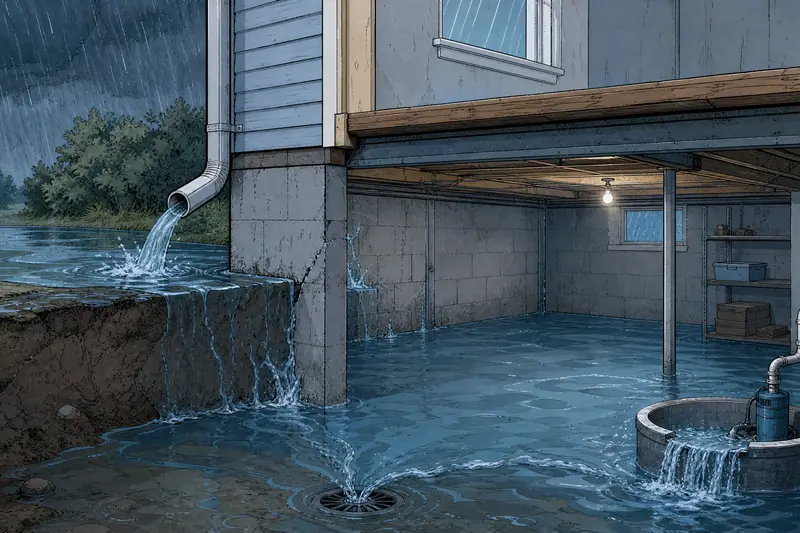
In Toronto this usually means water rising through a basement floor drain when the City sewer surcharges in heavy rain. What the add-on pays for, how much, and under what conditions is set by each insurer's policy wording. This guide explains the categories and the questions to ask; it cannot tell you what your own policy covers. The policy document and your insurer or broker are the authorities on that.
Is sewer backup covered by standard home insurance?
Typically not. IBC's flood and water damage guidance says sewer backup damage is typically not covered by a standard policy, and its flooding page says it is covered only if you have bought specific, optional sewer backup coverage.
Three kinds of water damage are often confused, and policies treat them differently:
| Type of water | What it is | Standard policy | Optional coverage |
|---|---|---|---|
| Sewer backup | Sewage or water backing up through drains and plumbing from the sewer | Typically not covered (IBC) | Optional sewer backup coverage, offered by most insurers (IBC) |
| Overland flooding | Water flowing over the ground into the home, such as from heavy rain, melting snow or an overflowing river or lake | Not typically included (Government of Canada; Ontario) | Optional overland flood coverage, offered by many insurers and often bundled with sewer backup (IBC) |
| Storm surge | Coastal flooding from storm surge or tidal waves | Typically not covered | Typically not covered by optional endorsements either (IBC) |
Ontario's Floods page (updated May 15, 2026) adds that overland flood insurance "is not automatically included in home insurance policies" and tells residents to check with their insurance provider.
What does sewer backup coverage usually exclude?
What is excluded depends on the policy, so the only reliable answer is in your own policy wording. The public sources this guide relies on do not publish a standard list of exclusions, and no general statement can be made about what every Ontario insurer leaves out.
What the sources do make clear is where the gaps between coverages tend to be. Damage from overland water is a different peril from sewer backup, and needs its own optional coverage. Storm surge is typically not covered even by optional endorsements. Additional living expenses, such as a hotel stay while the house is repaired, can apply when you have bought optional sewer backup or overland flood coverage, but IBC says "policyholders should check their own policies for limits".
When you read the wording, look for: a separate dollar limit for sewer backup that is lower than the rest of the policy; a separate or higher deductible; how contents in a finished basement are treated; and any condition about maintaining protective devices.
How do backwater valves affect sewer backup insurance?
A backwater valve is the device built to stop the kind of water sewer backup coverage pays for, and IBC recommends installing one "as recommended by your municipality". IBC also says "some insurers may also provide incentives for installing backwater valves and/or sump pumps". That is a possibility, not a rule: ask your own insurer whether it offers anything, and whether it asks about protective devices when pricing or renewing coverage.
Toronto's subsidy refunds four-fifths of a valve invoice, no more than $1,600 a valve and two valves per home, and puts as much as $2,250 toward a sump pump, plus a valve permit that the City's valve page lists at $38.67 each (the general fee schedule's $214.79 minimum may apply instead). The backwater valve guide explains how the device works and how to keep it clean, and the subsidy guide sets out the full list. If you install a valve, keep the permit, the inspection record and the invoice; an insurer may ask for them.
A valve needs maintenance to do its job. The City advises cleaning it every two to three months and before heavy rain. Ask whether your policy says anything about maintaining devices you have reported to the insurer.
What is overland flood coverage?
Overland flood coverage is a separate option that pays for certain damage when water flows over the ground and into the home. Ontario describes overland flooding as water "from heavy rain or melting snow" that "flows overground and enters your home"; IBC's examples include rivers, lakes or dams overflowing onto dry land.
The Government of Canada's overland flood insurance page (2026-03-23) says flooding coverage "is not typically included in a standard policy" and lists sewer backup, sump pump failure and storm surge among the related coverages to review. IBC says many insurers now offer optional overland coverage, often bundled with sewer backup, and that surface water or groundwater can flood homes away from rivers and lakes, so ask about cost and availability for your address.
In a summer cloudburst like July 2024, a Toronto basement can take water by both routes at once: through floor drains from a surcharged sewer, and through walls and window wells from water on the ground. Knowing which coverage applies to which route is the point of asking before a storm, not after.
What should you ask your insurer?
Ask questions that pin down the coverage in writing, and keep the answers with your policy. IBC's advice is to "speak to your insurance representative to confirm the specifics of your policy"; the Government of Canada suggests reviewing coverage before buying, before renewal and after a claim.
- Does my policy include sewer backup coverage? If not, can it be added, and at what cost?
- What is the dollar limit for sewer backup, and is it separate from the rest of the policy?
- What deductible applies to a sewer backup claim?
- Is overland flood coverage available for my address, and is it bundled with sewer backup?
- How are a finished basement and its contents treated?
- Do you offer anything for a backwater valve, sump pump or battery backup, and what proof do you need?
- Are there any conditions about maintaining those devices?
If water does come in, IBC advises reporting the claim to your insurer as soon as possible, photographing damaged items, keeping ruined items unless they are a health hazard, and keeping all cleanup receipts. In Toronto, also contact 311 so Toronto Water can investigate. The City's Flood Claims page (modified April 17, 2026) says the City is responsible only if you can establish that the damage was caused by its negligence, and that repairs may move faster through your own insurer. The basement waterproofing guide covers the other routes water takes into a basement.
How we put this page together
This page reports what the Insurance Bureau of Canada (Water Damage and Flood Protection; Flooding and Insurance; insured-loss releases of October 9, 2024 and July 16, 2026), the Government of Canada (Overland flood insurance, 2026-03-23), the Government of Ontario (Floods, updated May 15, 2026) and the City of Toronto (Flood Claims, modified April 17, 2026; subsidy page, modified June 18, 2026; Toronto Water staff report, October 22, 2025) say, as read in October 2026. It does not describe any insurer's product, premiums, discounts or exclusions, and it is not insurance advice. FSRA consumer pages could not be loaded and are not cited. Check your own policy wording with your insurer or broker.
Common questions
Is sewer backup insurance mandatory in Ontario?
None of the government or IBC sources reviewed here says it is required. IBC describes it as optional coverage offered by most insurers.
Does tenant insurance include sewer backup?
The Government of Canada says flood protection usually has to be added to a basic home or tenant policy. Tenants should ask their insurer whether sewer backup can be added for their contents.
Can the City of Toronto pay for sewer backup damage?
The Flood Claims page says the City is liable only where its own negligence is shown to have caused the damage. The City says claims are typically handled within 90 days and that repairs may be faster through your own insurer.
How soon should a sewer backup claim be reported?
IBC says to report claims as soon as possible and give complete, accurate details. Your policy sets the exact deadlines, so check its wording.
Will installing a backwater valve lower my premium?
IBC says some insurers may provide incentives for backwater valves or sump pumps. Whether yours does, and how much, can only be answered by your insurer.
Is water through a cracked foundation wall sewer backup?
Not usually. Sewer backup refers to water coming back through drains and plumbing from the sewer. Water through walls or window wells is a different route; ask your insurer how your policy classifies it.
Related guides
More help: see our guide to water and plumbing in Toronto homes.