
Winter & emergencies
How to Shut Off Water to Your House
To shut off water to your house in Toronto, close the main valve on the foundation wall where the water pipe enters, just before the meter; if it will not close, contact 311.
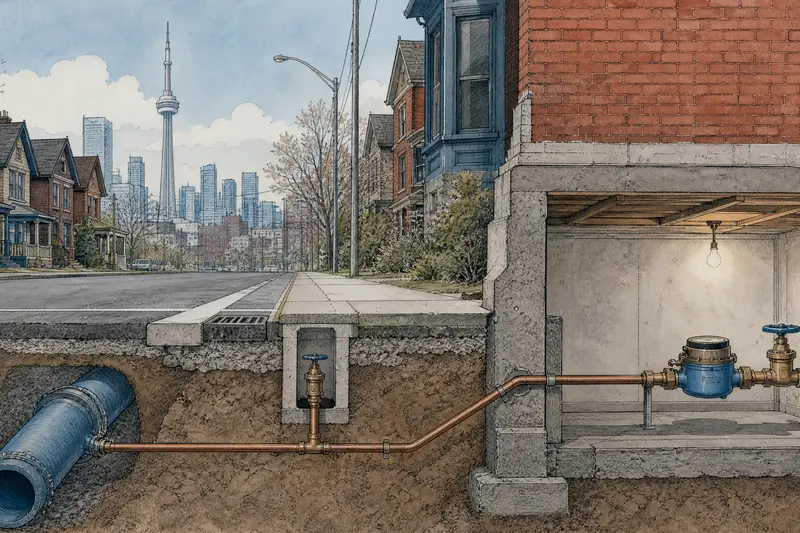
On this page
Key takeaways
- The City of Toronto says the main shut-off valve is "typically located on the foundation wall where the drinking water pipe enters the home, just before the water meter" (Pipe Leak or Burst).
- The valve inside the house is private plumbing, so keeping it working is the owner's job; the City asks you to "locate and label it" (Managing Water Around the House, modified May 14, 2026).
- If the inside valve fails, 311 can send Toronto Water to shut off the supply at the property line; the City's leak page says staff "will arrive within two hours".
- The City lists a Water Turn-off/Turn-on Fee of $110.13 CAD, effective January 1, 2026 (water rates and fees); no fee applies when the leak is on City property.
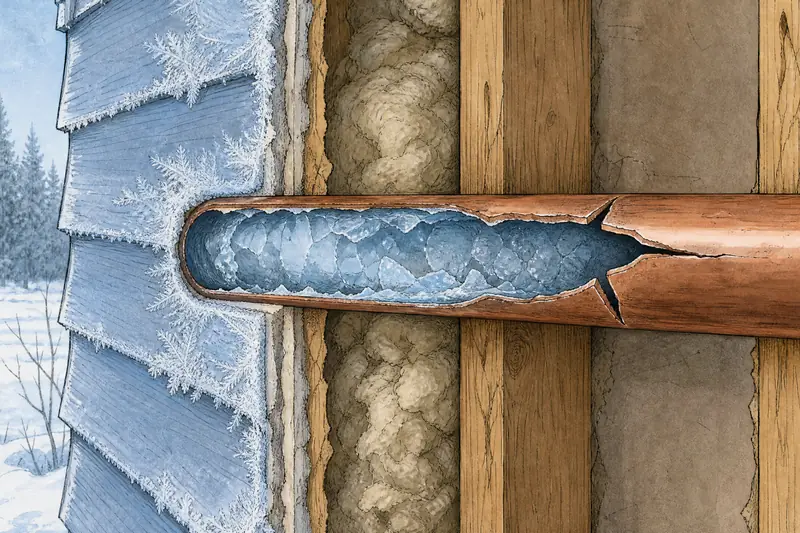
- The City's frozen-pipe page (modified October 19, 2026) tells owners to find the main valve and make sure it works before cold weather.
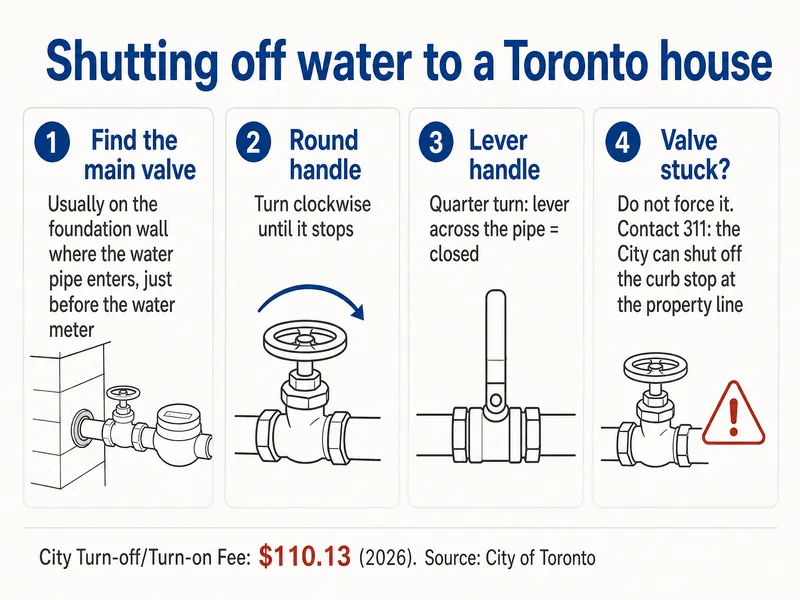
- Round-handle valves close clockwise; a lever (ball) valve is closed when the handle sits across the pipe.
Shut-off numbers from the City
- $110.13City Water Turn-off/Turn-on Fee, effective Jan 1, 2026 (CAD)City of Toronto, Water Rates and Fees
- 2 hoursTime within which Toronto Water staff arrive for a 311 water turn-off requestCity of Toronto, Pipe Leak or Burst
- 8 °CTemperature to keep areas with water pipes above, especially near the meterCity of Toronto, Prevent or Thaw Frozen Pipes
- 8 a.m.–8 p.m.Window for booked (non-emergency) City turn-off appointments, Monday to SundayCity of Toronto, Request Water Turn On or Off
How do you shut off water to your house?
You shut off water to your house by closing the main shut-off valve, which in most Toronto homes sits in the basement on the front foundation wall. The City of Toronto's Pipe Leak or Burst page calls it the "main water supply valve (also called the stop and waste valve)" and says you can close it to stop the water until a plumber arrives.
The order of steps in a leak is short:
- Go to the basement and find the pipe that comes through the front wall into the water meter.
- Close the valve on that pipe, on the street side of the meter.
- Open a cold tap on the lowest floor to let the water left in the pipes drain and to confirm the flow stops.
- If water is near outlets or appliances, keep away and switch off power at the panel only if you can reach it from a dry spot.
- Call a licensed plumber for the repair; the pipes inside the home are private property, so the City does not repair them.
If the valve will not close, skip to the 311 step in the section on a stuck valve below. Do not wait to find out in an emergency: the City's frozen-pipe advice (modified October 19, 2026) asks owners to locate the valve and make sure it works before cold weather.
Where is the main water shut-off valve?
The main water shut-off valve is on the foundation wall where the drinking water pipe enters the home, just before the water meter, according to the City. Look for a copper, lead or plastic pipe rising out of the basement floor or coming through the front wall, then a valve, then the meter with its register face.
In older Toronto houses the pipe often comes in under the front porch or behind a finished wall. Basement renovations sometimes box the valve in; a removable access panel is the usual answer. Semi-detached and row houses each have their own service and valve, while apartments and condos generally have valves on each unit or floor that building management controls.
The City's Managing Water Around the House page (modified May 14, 2026) advises you to "locate and label it so you can easily find it". A tag on the handle helps anyone in the house, including a tenant or a house sitter, act fast.
Do not touch the meter itself. The City's turn-on and turn-off page says water meters belong to the City and should only be removed by City staff. If your service pipe is grey and soft-looking, read the lead pipes guide before anyone works on it.
Which way do you turn the valve to shut off water?
Turn a round-handle valve clockwise to shut off water, and turn a lever-handle valve a quarter turn so the lever sits across the pipe. These are general rules for common valve types, not City instructions, so if your valve has an arrow or a label, follow it.
| Valve type | How it looks | To close | Things to know |
|---|---|---|---|
| Gate valve | Round wheel handle, tall body | Turn clockwise several full turns until it stops | Common in older homes; the internal gate can stick or fail to seal |
| Globe or stop-and-waste valve | Round or oval handle, often with a small drain cap on the side | Turn clockwise until it stops | The side cap lets you drain the pipe after the valve; the City uses the "stop and waste" name |
| Ball valve | Short lever handle | Quarter turn; lever across the pipe means closed | Opens and closes quickly; lever in line with the pipe means open |
| City curb stop | Buried at the property line, reached through a small cover | City staff only, with a long key | Toronto Water operates it on request through 311 |
Close the valve fully but gently. On an old gate valve, forcing the handle past the stop can snap the stem or break the gate off inside, which leaves you with no shut-off at all. If the handle will not move with steady hand pressure, treat it as stuck.
Check that it worked by opening a cold tap on the lowest floor. The flow should slow to a trickle and stop within a minute or two as the pipes drain. A tap that keeps running at full pressure means the valve is not sealing.
What if the shut-off valve is stuck?
If the shut-off valve is stuck or will not seal, contact 311 and ask Toronto Water to turn off the supply at the property line. The City's leak page says water turn-off requests are made by calling 311 ("online requests are not available"), that staff "will arrive within two hours", and that someone must be home so staff can reach the property.
A fee may apply. When the leak is on the private side, the City says "there will be a fee to turn off the water and to turn it back on once repairs are complete". Its water rates and fees page (modified May 5, 2026) lists the Water Turn-off/Turn-on Fee at $110.13, effective January 1, 2026; fees are added to the utility bill. When the leak is on City pipe, the City says there is no fee.
Note that the leak page was last modified in November 2017, so 311 is the place to confirm current timing. In the meantime, catch what you can with buckets and towels and move valuables off the basement floor.
A stuck valve is worth replacing once the emergency is over. Replacing the main valve is plumbing work on the water system: ask the plumber whether a permit applies, and see the plumbing permit guide and plumber cost guide for what the City charges and how to check a licence.
What is the City's curb stop valve?
The curb stop is the City-owned valve on the water service at the property line, under a small metal cover in the lawn, driveway or sidewalk. The City's Request Water Turn On or Off page (modified May 28, 2026) describes paying to have the City "turn off the curb stop at your property line", which stops water from entering your private property.
The curb stop marks the ownership line. The City says it is responsible for the pipe "from the watermain on the street to the property line", and property owners for "the part that runs from the property line into the home". Owners should not operate the curb stop themselves; it needs a long key, and Toronto Water staff do this work.
You can book a planned turn-off through the City's online form or 311 for repairs, renovations or a long absence. The City says turn-off appointments run from 8 a.m. to 8 p.m., Monday to Sunday, that "someone over the age of 18" must be on site, and that it "will not turn off the water for landlord or tenant disputes". Owners can make the request, and so can contractors after notifying the owner.
How do you turn the water back on?
Turn the water back on by opening the main valve slowly, a little at a time, with a tap open on the top floor. Slow opening limits the pressure surge that can knock pipes and loosen fittings.
- Close any taps opened during the repair except one cold tap on the top floor.
- Open the main valve a quarter of the way, wait for the pipes to fill, then open it fully.
- Let the open tap run until it stops spitting air, then run each other tap briefly.
- Check the repair, the meter and the valve itself for drips over the next hour.
- If the hot water tank was drained, make sure it is full before its burner or element is switched back on, following the maker's manual; gas appliance work is for a TSSA-registered contractor.
If the City shut the curb stop, book the turn-on through 311 or the online form. Turn-on appointments are available at any time, the City says, and the turn-on fee is waived if both requests are made within 30 minutes and staff have not left.
Afterwards, the meter is a quick leak check. The City says that with all water off, if the "small red triangle on the face of the meter is turning, you likely have a leak".
When should you shut off the main water valve?
Shut off the main water valve whenever a pipe has burst or is leaking and you cannot isolate it with a fixture valve under the sink or toilet. The City's frozen-pipe page also says to turn off the main supply if a pipe has burst or may burst.
Leaving home for a while is another reason. The City's household water page suggests that on vacation you can turn off the main supply and open the taps to drain the plumbing, which protects against leaks and frozen pipes. In winter, keep the heat on as well; the City asks owners to keep areas with water pipes above 8 °C. See the frozen pipes guide and how to prevent frozen pipes.
If a street watermain breaks, the City shuts the main, not you; the water main break guide covers what to do at home.
How we put this page together
This page is based on City of Toronto pages checked October 26, 2026: Pipe Leak or Burst (modified November 17, 2017), Managing Water Around the House (May 14, 2026), Request Water Turn On or Off (May 28, 2026), Water Rates and Fees (May 5, 2026) and Prevent or Thaw Frozen Pipes (October 19, 2026). The valve-type table describes common hardware in general terms and is not a City instruction. Left out: plumber call-out prices (no primary source publishes them), brand-specific valve advice and forum anecdotes.
Common questions
Can you turn off the City curb stop yourself?
No. The curb stop is City property at the property line, and the City asks owners to contact 311 or book a turn-off so Toronto Water staff operate it. It also needs a long key that homeowners do not normally have.
How much does the City charge to shut off water in Toronto?
The City lists a Water Turn-off/Turn-on Fee of $110.13 CAD, effective January 1, 2026, added to the utility bill. The City says there is no fee when the water is shut off to fix a leak on City property.
Should you shut off the water heater too?
If you are only closing the main valve for a short repair, the tank stays full and can usually be left alone. If the tank will be drained, it must be refilled before the burner or element comes back on; follow the maker's manual, and leave gas work to a TSSA-registered contractor.
How long does it take Toronto Water to come out?
The City's leak page says staff will arrive within two hours of a 311 turn-off request, and someone must be home to let them reach the property. That page dates from 2017, so ask 311 for current timing.
Why does water keep running after the valve is closed?
A slow trickle for a minute or two is the pipes draining. Steady flow means the valve is not sealing, which is common with old gate valves; contact 311 for a turn-off at the property line and plan to replace the valve.
Can you test the main valve before an emergency?
Yes, and the City suggests making sure it works before winter. Close it gently, check that a low tap stops, then reopen it slowly; if the handle will not move with hand pressure, have a licensed plumber look at it rather than forcing it.
Does a condo owner have a main shut-off?
Most condo and apartment units have shut-off valves for the unit or for each fixture, and the building's main valve is controlled by management. Check your unit and ask the property manager where the valves are before you need them.
Related guides
More help: see our guide to water and plumbing in Toronto homes.