
All Toronto Home Water Guides
Every Toronto home water guide on this site, sorted into seven topics, each opened by one sourced answer: tap water, softeners, lead and old pipes, flooding, winter, water heaters and costs.
Key takeaways
- 33 guides in seven topics, each built on City of Toronto, Ontario, Health Canada or federal sources checked in October 2026.
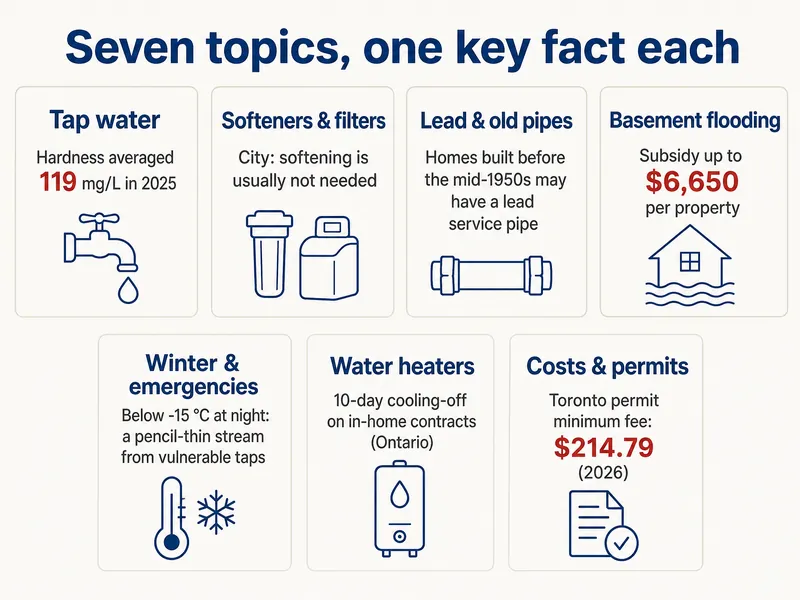
- Tap water: the City's 2025 analysis summary puts average hardness at 119 mg/L, or 7.0 grains per gallon.
- Lead: the City says houses built before the mid-1950s may have a lead service pipe (Lead & Drinking Water).
- Flooding: City subsidies now reach $6,650 per property, up from $3,400 (news release, April 28, 2026).
- Winter: the City suggests a pencil-thin stream from vulnerable taps when nights fall below −15 °C.
- Costs: Toronto's 2026 building permit fees start at $214.79, under Municipal Code Chapter 441.
Seven topics, key figures
- 119 mg/LToronto tap water hardness, 2025 average across 119 samplesCity of Toronto
- $6,650New per-property ceiling on City flooding subsidies, up from $3,400City of Toronto news release, April 28, 2026
- −15 °CNight temperature at which the City suggests a thin stream from vulnerable tapsCity of Toronto
- $214.79Minimum Toronto building permit fee, 2026City of Toronto, Building Permit Fees
What should you know about Toronto tap water?
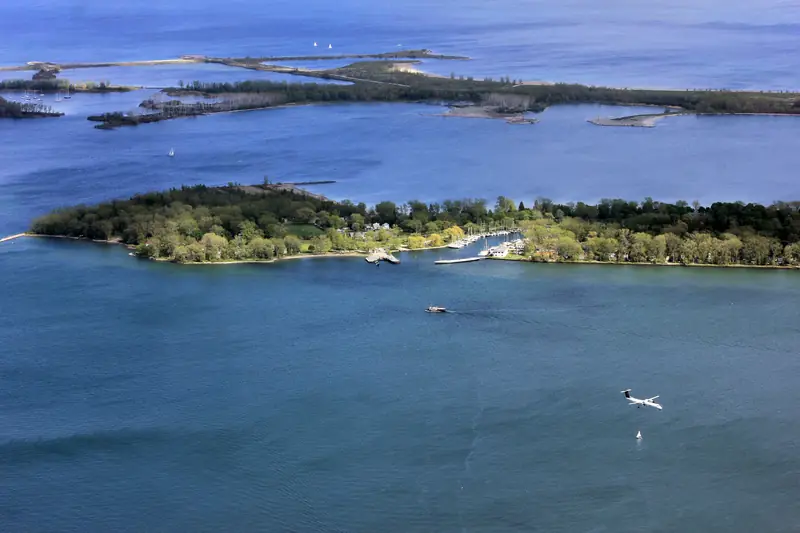
Toronto tap water comes from Lake Ontario, and the City states plainly that it "is safe to drink" (Tap Water in Toronto, modified July 22, 2026). These four guides cover its hardness, its annual test results and how neighbouring regions compare.
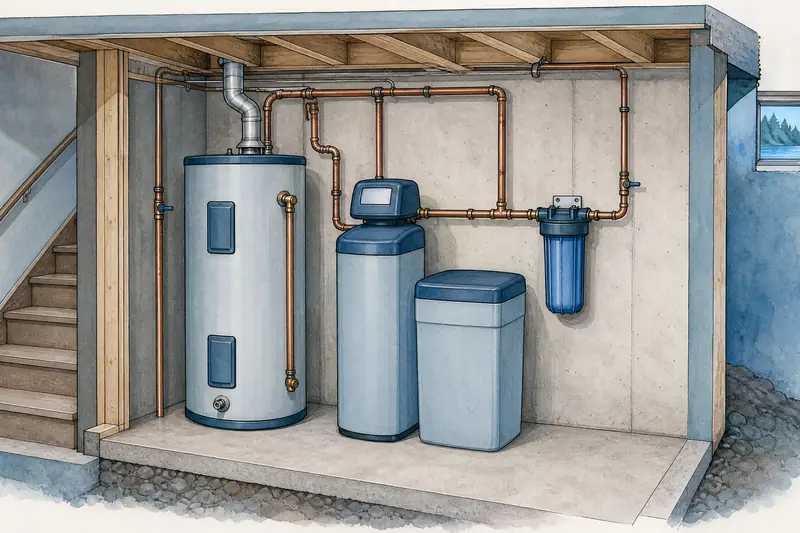
Do you need a softener or a filter?
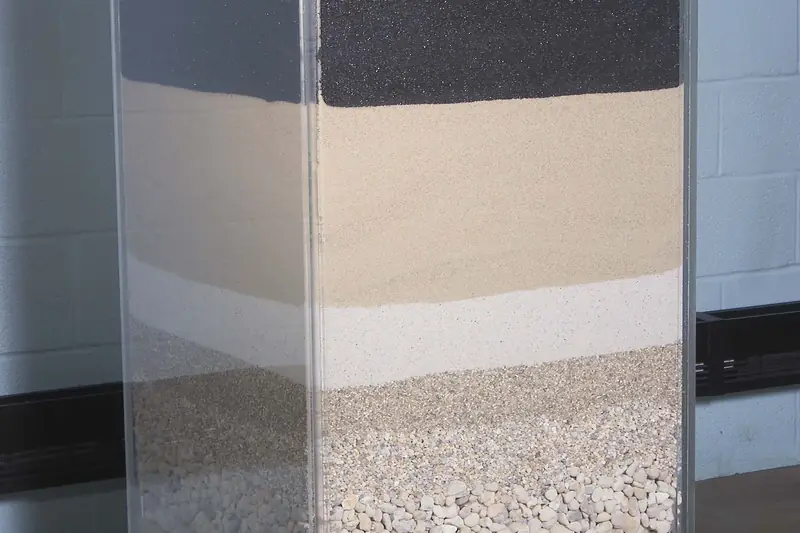
Usually not for hardness alone: the City says water softening systems "are usually not needed", and Health Canada has set no health-based value for hardness. These guides explain when a softener, filter or reverse osmosis unit makes sense, how each works and what drives the price.
Does your home have lead or failing pipes?
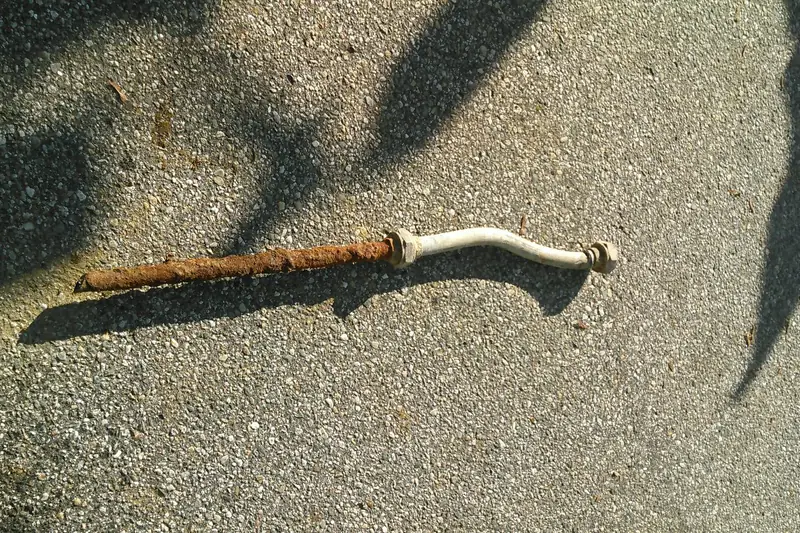
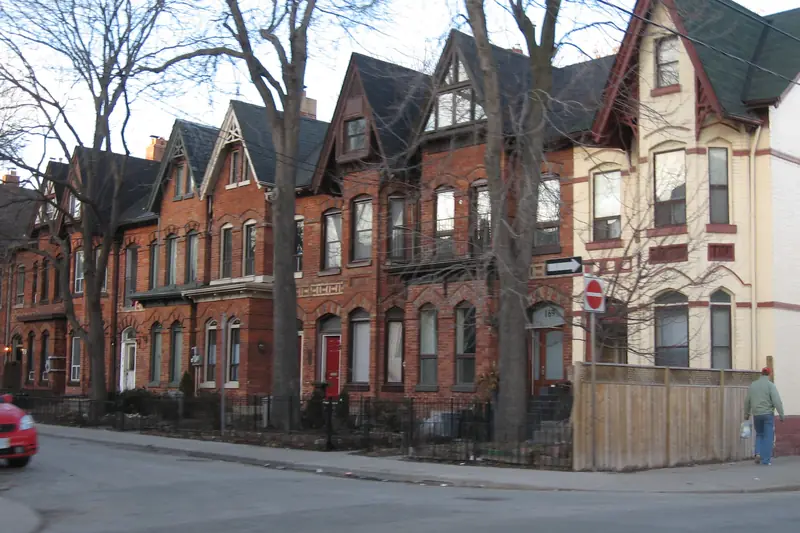
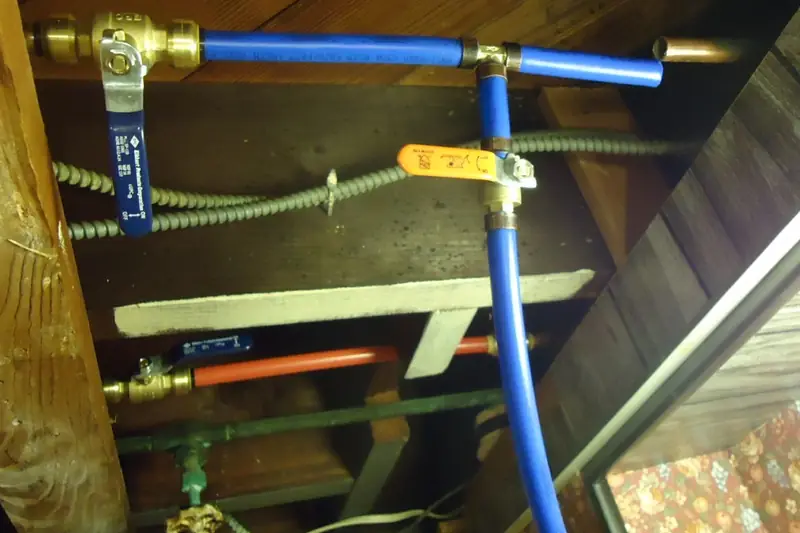
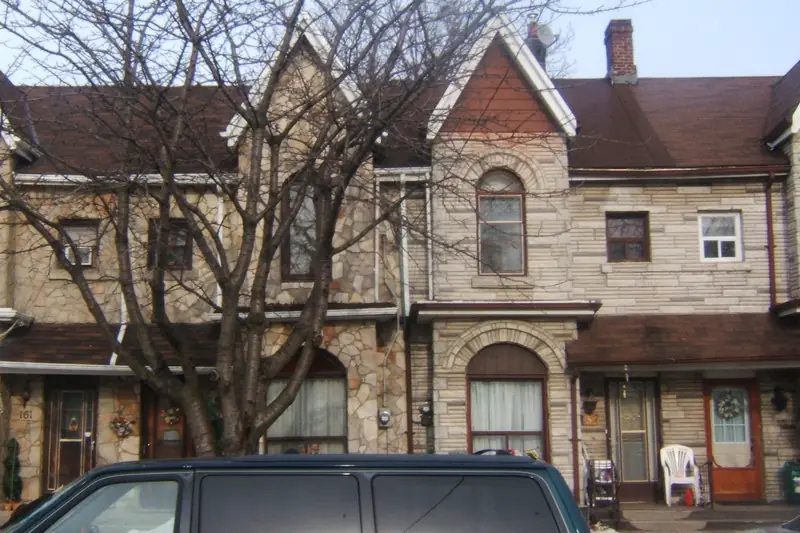
It might: the City flags homes built before the mid-1950s as possible lead-service houses, and it offers them a lead test kit free of charge. The other guides here cover Kitec, whose class-action settlement closed to claims on January 9, 2020, plus polybutylene and galvanized steel.
How do you protect a basement from flooding?
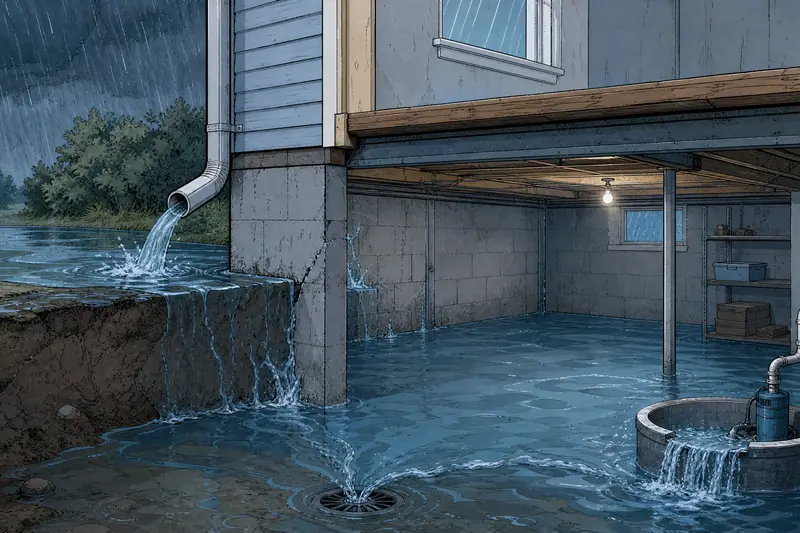
Start with the City's subsidy program, which pays four-fifths of eligible invoices up to set caps, then add the devices and grading that fit your house (Basement Flooding Protection Subsidy Program, modified June 18, 2026). These nine guides go device by device, including insurance and the downspout by-law.
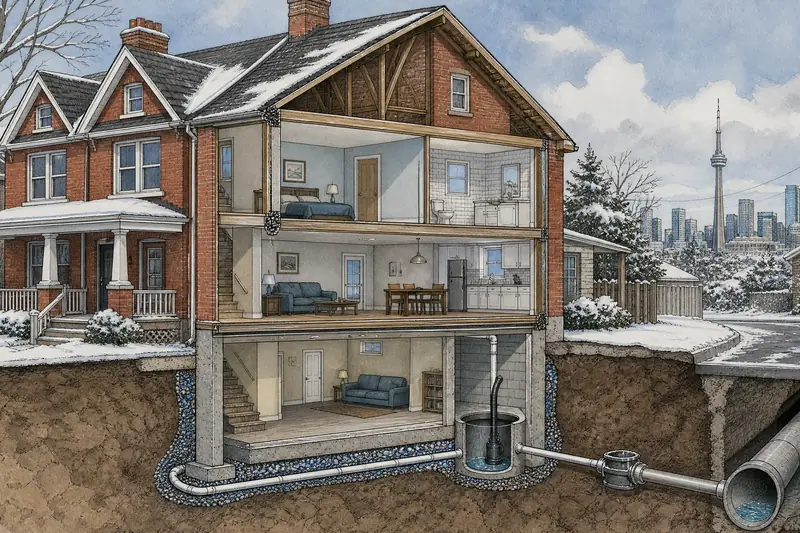 Basement floodingThe City's flooding subsidy program
- Basement floodingHow a backwater valve works
 Basement floodingInstalling a backwater valve: cost
 Basement floodingInstalling a sump pump: cost
- Basement floodingBattery backup for a sump pump
 Basement floodingSewer backup insurance in Ontario
 Basement floodingWeeping tile replacement cost
- Basement floodingBasement waterproofing cost
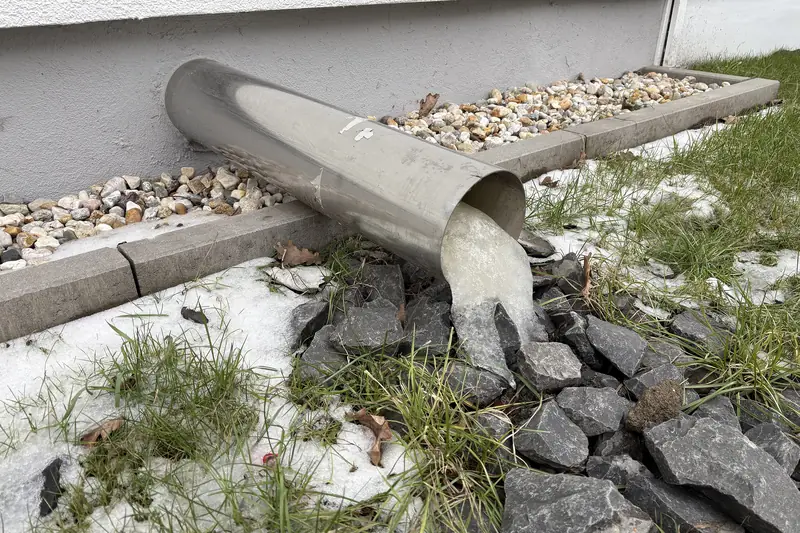 Basement floodingToronto downspout disconnection
What should you do in winter and emergencies?
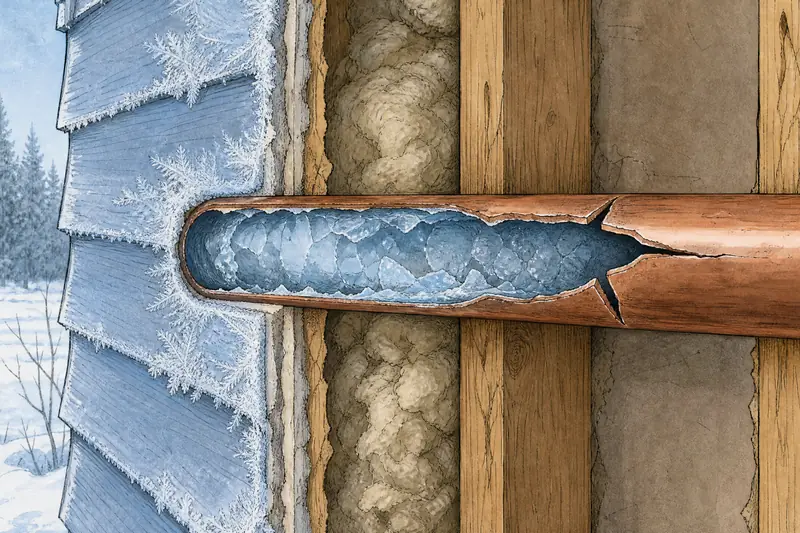
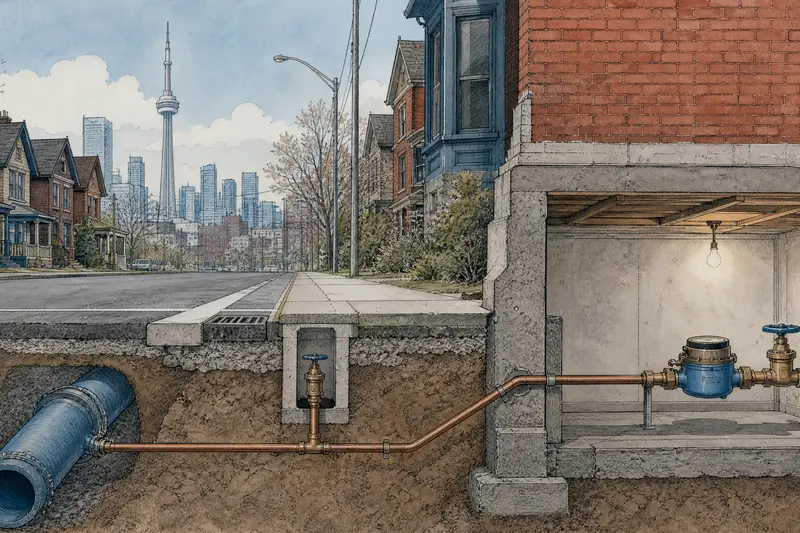
Keep pipe spaces above 8 °C, know where your main shut-off valve is, and never thaw a pipe with a flame, the City advises (Prevent or Thaw Frozen Pipes, modified October 19, 2026). These guides cover frozen pipes, street watermain breaks, shutting off the water and pressure problems.
Should you rent or own a water heater?
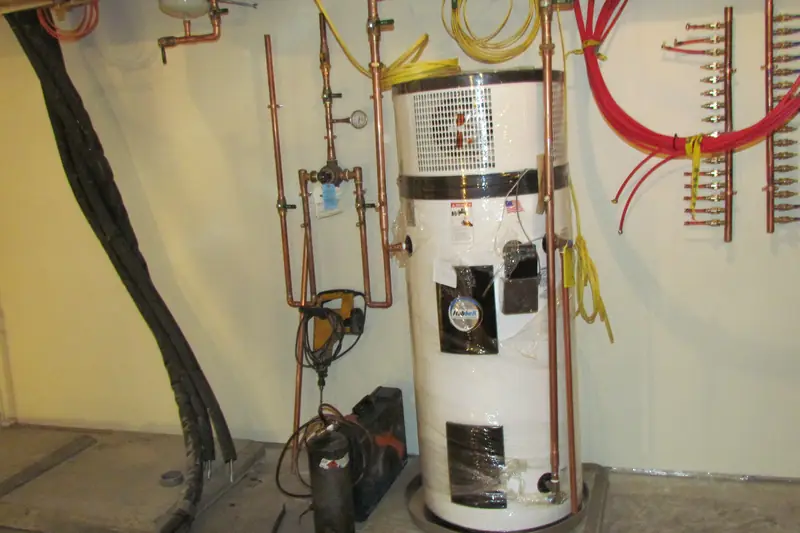
Over a water heater's whole life, owning beats renting on cost, says Natural Resources Canada, though an old tank's buyout can still be poor value once you carry the repairs. One guide covers rental buyouts and contract rights; the other covers tankless heaters.
What do plumbing jobs and permits cost?
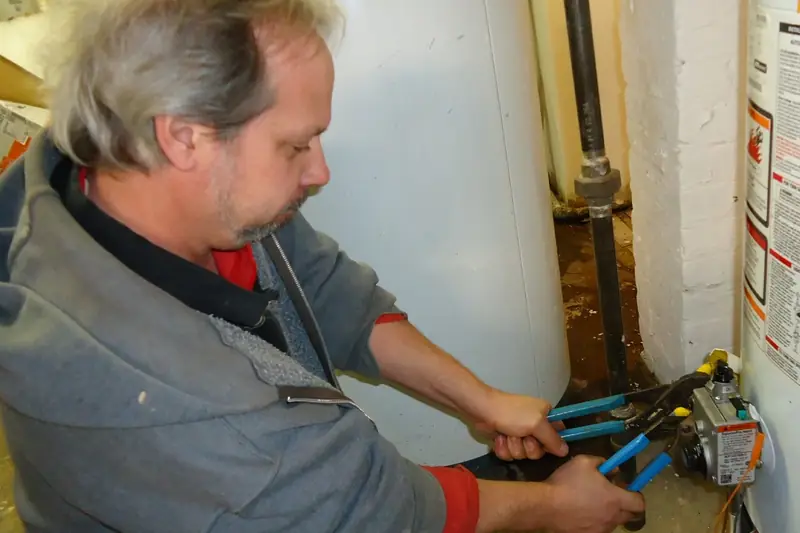
The fixed, checkable costs are the City's: permit fees under Chapter 441 start at $214.79 in 2026, while backwater valves are priced at $38.67 each on their own permit page, though that minimum may still apply; confirm with Toronto Building. The two guides here explain those fees, plumber licensing and what a written quote should list.
| Topic | Guides | Main public source | One figure to know |
|---|---|---|---|
| Tap water | 4 | City of Toronto, Toronto Water | 119 mg/L average hardness (2025) |
| Softeners & filters | 6 | City of Toronto; Health Canada | No health-based limit for hardness |
| Lead & old pipes | 5 | City of Toronto; Health Canada | Lead guideline 0.005 mg/L (Health Canada, 2019) |
| Basement flooding | 9 | City of Toronto subsidy program | Up to $6,650 per property |
| Winter & emergencies | 5 | City of Toronto, 311 | Keep pipe areas above 8 °C |
| Water heaters | 2 | NRCan; Government of Ontario | 10-day cooling-off on in-home contracts |
| Costs & permits | 2 | Toronto Building; Skilled Trades Ontario | $214.79 minimum permit fee (2026) |
How we put this page together
Each topic summary on this page is drawn from the City of Toronto, Government of Ontario, Health Canada and Natural Resources Canada pages linked in it, checked October 26, 2026, and matches the figures in the guides themselves. Left out: contractor price lists, company rankings and forum anecdotes; this site informs homeowners and is not a plumbing business.
Common questions
Which guide should you read first?
If you have a problem today, open the winter and emergencies guides, starting with the main shut-off valve. If you are planning ahead, the flooding subsidy guide covers the City's largest homeowner program.
Are the guides specific to Toronto?
Yes. They use City of Toronto programs, by-laws and fees, Ontario law and Canadian federal sources. The GTA hardness guide adds Peel, York and Durham figures.
How often are the guides checked?
Each guide was checked against its sources in October 2026 and dates every amount. City programs, such as the flooding subsidy, change; the guides give the date the City last modified each page.
Do the guides give prices for plumbing work?
Only figures a public source publishes, such as City subsidy caps, permit fees and the City's $3,800 average market cost for a backwater valve. For other jobs they explain what drives the price and what a written quote should list.
Is there a single page of short answers?
Yes: the FAQ page answers ten common questions in a few sentences each, with links to the full guides.
Who is behind these guides?
The guide's editors, working only from public sources. No contractor is connected to the site, and it does no plumbing work; see the about page.