
Winter & emergencies
Toronto Water Main Break: What Homeowners Should Do
A Toronto water main break is the City's to fix: report it to 311, expect repairs of up to 24 hours or longer, then clear discoloured water by running the basement cold tap for about 10 minutes.
On this page
Key takeaways
- Toronto has more than 6,100 km of watermains and about 700 breaks a year, down from 1,500 to 1,800 a year a decade ago (City of Toronto, modified August 26, 2026).
- Report a break to 311; the City says repairs can take "up to 24 hours and sometimes longer," and water may be shut off while crews work.
- Breaks peak from November to March; Toronto Water's 2026 budget names extreme cold and temperature swings as the leading cause.
- After a break, the City's fix for brown water is to remove tap aerators and run the basement laundry or meter-side cold tap for about 10 minutes.
- For damage claims, the City pays only where you can show its negligence caused the loss, and says an insurance claim may get repairs moving faster (Flood Claims, modified April 17, 2026).
- The average Toronto watermain is 61 years old, and 15% are more than 100 years old.
What should you do during a Toronto water main break?
During a Toronto water main break, report it to 311, keep clear of the site, and prepare for a few hours or more without water. The watermain under the street belongs to the City, so homeowners do not repair it; the useful work at home is reporting, protecting your basement and planning around the shut-off.
- Report it. Call 311 with the nearest address and what you see: water bubbling through asphalt, a sinkhole, or water running along the curb.
- Stay back. Water can undermine the road and sidewalk; do not drive or walk through the flooded area.
- Fill some containers for drinking and flushing if your water is still on, in case crews shut off the main.
- Watch your basement. If water is heading toward your house, move valuables up and note the time for any later claim.
- Turn off appliances that use water, such as a washer or dishwasher, until supply and pressure are back.
Toronto Water and its contractors say they give notice of planned disruptions "whenever possible," but an emergency break may give no warning.
How do you report a water main break?
Report a water main break to 311, the City's single number for water emergencies; Toronto Water crews respond around the clock.
Have this ready when you call: the address or nearest intersection, where the water is coming up (road, boulevard, sidewalk or lawn), whether it is getting worse, and whether your own water is off, low or discoloured. If water is coming up on your front lawn or boulevard, say so; the crew will need to work out whether the leak is on the City's side or yours.
After the call, the City decides how to isolate the main. On its watermains page it says crews may shut off the flow to repair the pipe, and that temporary road repairs usually take another one to two days after the pipe is fixed.
Why do water mains break in winter?
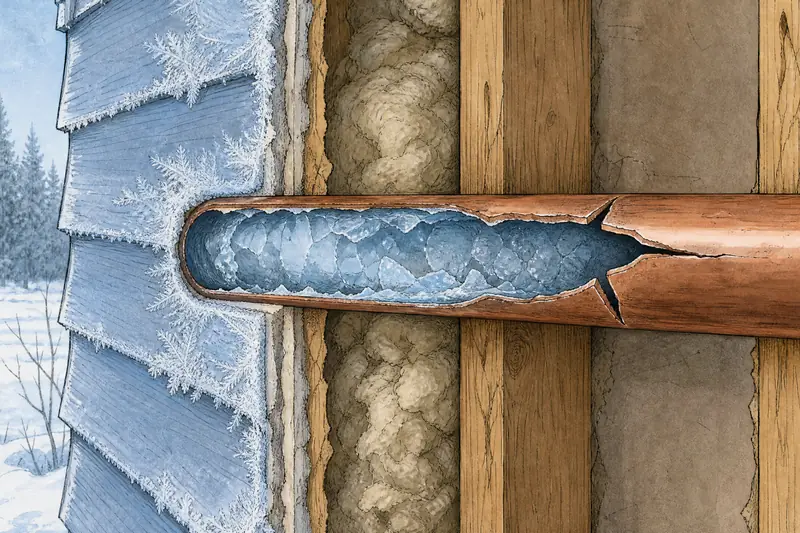
Water mains break most often in winter because freezing soil pushes on the pipe and sudden temperature swings stress old metal. The City says breaks are more frequent from November to March, and Toronto Water's 2026 budget lists "inclement weather (extreme cold or temperature fluctuations)" as the leading cause, followed by excavation, corrosive soils and ground settling.
Age and materials matter too. Thin-walled cast iron pipes laid in the 1950s and 1960s break more often, and corrosion eats pits into cast and ductile iron from the outside. A small leak can wash away the soil around a pipe until it loses support and fails. The City says North York, Scarborough and Etobicoke have the highest break rates, largely because of acidic clay soils and older small cast iron mains.
Mains are buried about 1.8 m deep, just below the frost line. The City replaces about 30 to 40 km of watermains a year and rehabilitates more than 100 km, which is part of why breaks have fallen to about 700 a year.
| Measure | Figure | Source |
|---|---|---|
| Length of watermains | More than 6,100 km | City watermains page, Aug 26, 2026 |
| Breaks per year | About 700 (1,500 to 1,800 a year ten years earlier) | City watermains page |
| Average age | 61 years | City watermains page |
| Older than 100 years | 15% | City watermains page |
| Replaced each year | About 30 to 40 km | City watermains page |
| Rehabilitated each year | More than 100 km | City watermains page |
| Leading cause of breaks | Extreme cold or temperature swings | Toronto Water 2026 budget |
What happens to your water after a break?
After a break, your water may be off for the repair, then come back at low pressure, cloudy or brown as sediment stirred up in the main moves through. The City's Discoloured Tap Water page (modified May 11, 2026) lists watermain construction and nearby hydrant use as causes.
When every tap is affected, the City's steps are:
- Take the aerators (screens) off your taps.
- Turn on the cold tap in the basement laundry room, or the one closest to the water meter and main shut-off.
- Let it run for 10 minutes.
- Put the aerators back.
If the water is still discoloured, submit a 311 request. The City says it will investigate within eight hours, someone must be home, and staff may flush for up to 30 minutes or check the meter. If only the hot water is discoloured, the City treats that as a private plumbing issue, often in the water heater. As a precaution, hold off on hot water and laundry until the cold runs clear, so sediment is not drawn into the water heater or onto clothes. Tenants should report discoloured water to the landlord or superintendent.
Low pressure that lasts after the repair is covered in the low water pressure guide.
Who pays for damage from a water main break?
The City pays for damage from a water main break only if you can establish that the City's negligence caused it. Its Flood Claims page says watermain breaks "can be attributed to causes other than the City's failure," including freeze-thaw pressure, and that the City is not responsible where Toronto Water met its installation and maintenance standards.
If water from a break reaches your property:
- Call 311 right away. The City says reporting creates a record that the claims investigation reviews; not reporting can hurt your ability to prove negligence.
- Document everything: photos, times, the 311 reference and clean-up receipts.
- Call your insurer. The City notes that "Repairs to your property may be expedited by making a claim through your insurance company," and that Toronto Water staff are not involved in insurance claims. Whether your policy responds depends on its wording; the sewer backup insurance guide explains how water damage cover is usually split.
- File a City claim promptly if you believe negligence was involved. The City says flood-related claims are typically completed within 90 days, longer after big storms.
Is it a main break or your own pipe?
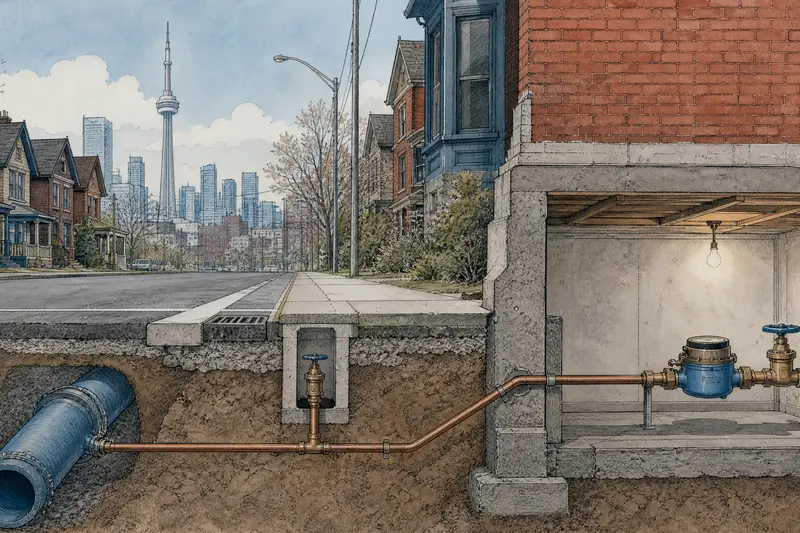
It is the City's main if water is coming up in the road or affects the whole street; it is likely your own pipe if only your house has a problem or water appears between the property line and your foundation. The City owns the water service from the main to the property line, and the owner is responsible from the property line into the home.
A few checks help sort it out:
- Ask the neighbours. If they have water and normal pressure and you do not, the problem is probably on your service or inside the house.
- Read the meter. With every indoor and outdoor tap off, watch the meter's flow indicator (a red triangle or black star). The City says movement while no water is used may mean a leak on your side.
- Look at the lawn. Water seeping up between the sidewalk and the house points to the service pipe.
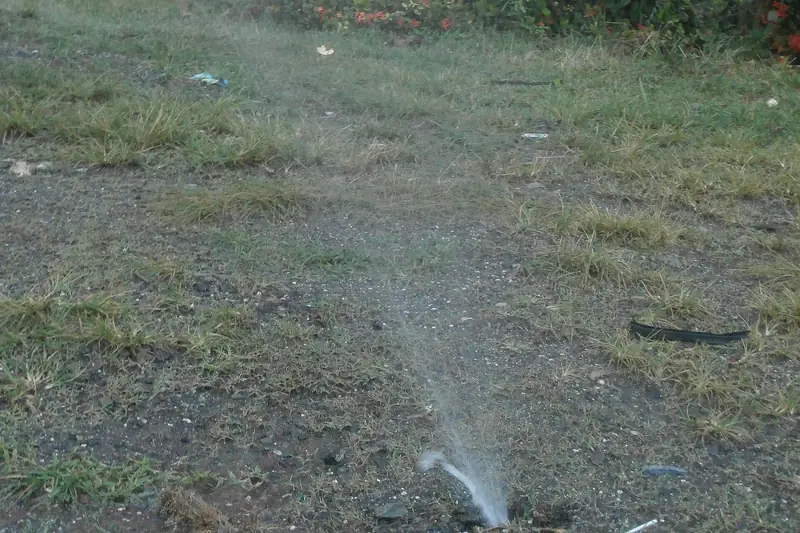
If the leak turns out to be on the City's section, the City shuts off the water at the property line and repairs it with no fee. If it is on the private section, repairs are the owner's job, and there is a fee for the City to turn the water off and back on. In winter, a house with no water while the street is fine may simply have a frozen service: see the frozen pipes guide, and know where your own valve is from the shut-off guide.
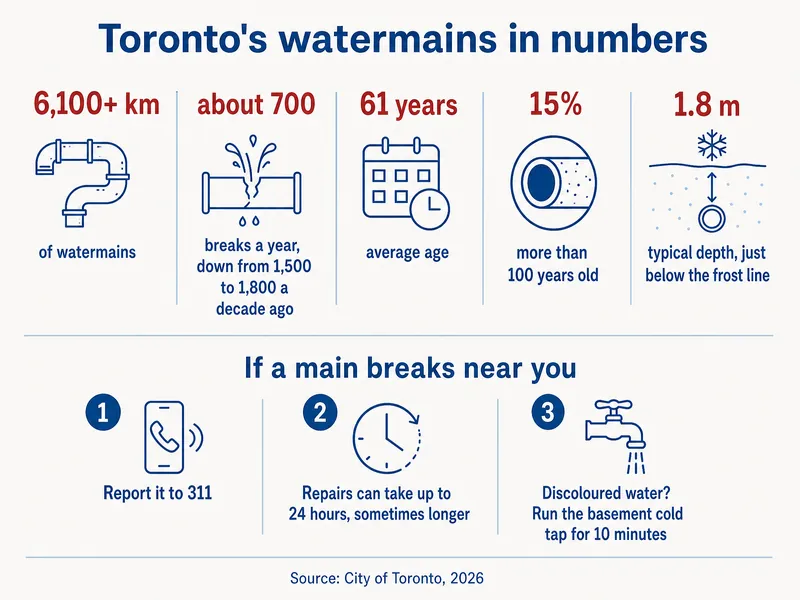
Toronto watermain figures
- 6,100+ kmWatermains in the City's distribution systemCity of Toronto, modified Aug 26, 2026
- About 700Breaks a year now; ten years earlier the yearly count ran 1,500 to 1,800City of Toronto, modified Aug 26, 2026
- 61 yearsAverage age of Toronto's watermainsCity of Toronto, modified Aug 26, 2026
- 10 minutesHow long to run the basement cold tap to clear discoloured waterCity of Toronto, modified May 11, 2026
- 90 daysTypical time to complete a flood or sewer backup damage claimCity of Toronto, modified Apr 17, 2026
How we put this page together
This page relies on the City of Toronto's watermains page (modified August 26, 2026), Toronto Water's 2026 budget book, the Discoloured Tap Water page (modified May 11, 2026), the Pipe Leak or Burst and leaking service line pages, the water leaks page, and the Flood Claims page (modified April 17, 2026), checked October 2026. It does not judge whether the City is liable for any particular break or whether any insurance policy pays; the "about 1,400 breaks a year" figure that circulates online was left out because the City's current page says about 700.
Common questions
Is tap water safe to drink after a water main break?
Follow the City's instructions for your street. Its discoloured-water steps are about clearing sediment; if the City issues any other advice after a repair, it will come through 311 or notices. Run the cold tap until it is clear before drinking.
How long will the water be off during a main repair?
The City says repairs can take up to 24 hours and sometimes longer, depending on how bad the break is. Road restoration takes a further one to two days but usually does not affect your supply.
Should the main shut-off at home be closed during a break?
Usually not: the City isolates the broken main itself. It is still worth knowing where your valve is, typically on the foundation wall just before the meter, in case a leak turns out to be on your side.
Why is my water brown only in the hot taps?
The City treats hot-only discolouration as a private plumbing issue, often in the water heater rather than the main. A plumber or the water heater guide can help with next steps.
Who fixes the boulevard and lawn after a break on the City side?
The City handles the road and its work area, and says temporary road repairs take one to two days after the pipe is fixed. If the repair damaged your sod or driveway apron, raise it through 311.
Are some Toronto neighbourhoods more prone to breaks?
Yes. The City says North York, Scarborough and Etobicoke have the highest break rates, largely because of acidic clay soil and older small cast iron pipes.
Can a homeowner be billed for a leak on the City side?
The City's leak pages say repairs on City infrastructure carry no fee. Charges apply to shut-offs and repairs on the private section, from the property line into the home.
Next steps for winter water problems
More help: see our Toronto water and plumbing guide.