
Basement flooding
Downspout Disconnection in Toronto: Rules and How-To
Downspout disconnection in Toronto is mandatory for every property owner: roof water must leave the City sewer, land away from the foundation, and stay off neighbours' lots and City sidewalks.
On this page
Key takeaways
- The City says it is "mandatory for all property owners in Toronto" to disconnect downspouts from the City sewer; the rule has applied city-wide since 2016.
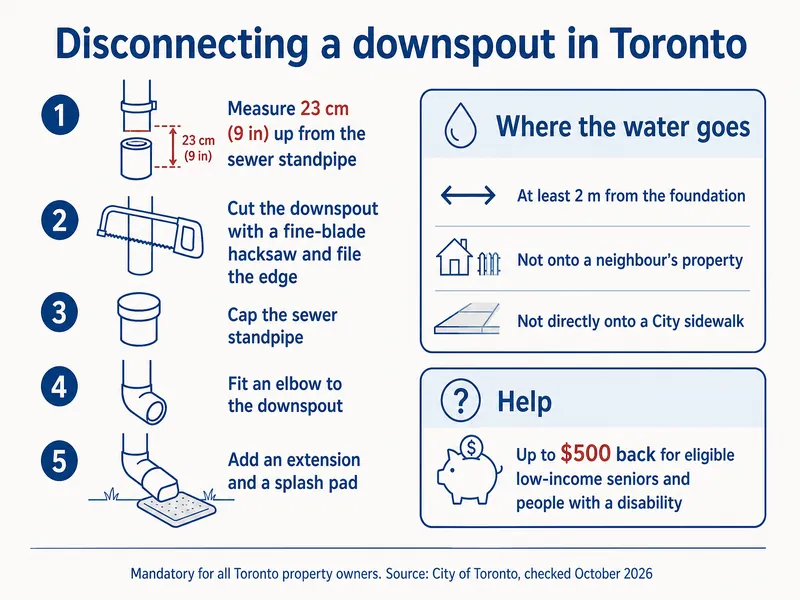
- The City's how-to starts by measuring 23 cm (9 in) up from the sewer standpipe, cutting there, and capping the pipe.
- Toronto's 2026 flood-readiness infographic says to extend downspouts so water lands at least 2 m (6 ft 6 in) from the foundation.
- Water must not harm a neighbour's property or flow directly onto a City sidewalk.
- Exemptions exist only where disconnection is "hazardous or not technically feasible," decided in writing by the City.
- Eligible low-income seniors and people with a disability can get up to $500 back for the work (household income $50,000 or less, as of October 2026).
Is downspout disconnection required in Toronto?
Yes. Downspout disconnection is required for every property owner in Toronto: the City's program page (modified July 22, 2025) says owners must "ensure their downspouts are disconnected from the City's sewer system." The rule sits in Municipal Code Chapter 681, Sewers, section 681-11S, and was phased in by area until it applied across the whole city in 2016.
The requirement also matters for money. The City's Basement Flooding Protection Subsidy Program only pays for a backwater valve, sump pump or other eligible work if the property's downspouts are disconnected or the City has granted an exemption. Disconnecting the downspouts is not itself a subsidized item.
Why does Toronto require downspout disconnection?
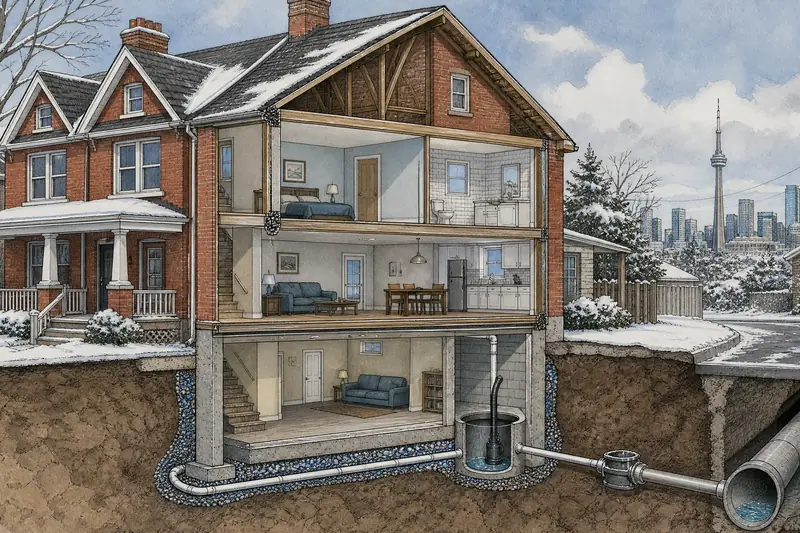
Toronto requires it because roof water poured into the sewer during heavy rain can overload the pipes, back sewage up into basements and push polluted water into local waterways. Moving that water onto lawns and gardens takes it out of the pipes at the worst moment.
The scale of recent storms shows why the City pushes this. For the flash floods of July 15 to 16, 2024 across Toronto and the GTA, the Insurance Bureau of Canada counts more than $909 million in insured damage, and a Toronto Water report says July and August 2024 rain flooded basements in "more than one thousand properties in Toronto." The IBC's own home-protection advice also says to disconnect downspouts that are tied into weeping tiles or french drains.
How do you disconnect a downspout?
The City's own five-step method is a cut, a cap and an extension. Many owners do this themselves with basic tools; anyone uncomfortable on a ladder or with a hacksaw can hire help, and the steps below are what the work should include either way.
- Measure. Mark the downspout 23 cm (9 in) above where it enters the sewer standpipe.
- Cut. Cut at the mark with a fine-blade hacksaw, lift out the cut piece so it does not drop into the drain, and file the rough edge.
- Cap. Put a cap on the open sewer standpipe to keep out water, debris and animals.
- Fit an elbow. Slide the downspout into an elbow, crimping the end with pliers if it needs a tighter fit.
- Extend. Attach a downspout extension to carry the water away, secure the joints with sheet metal screws, and set a splash pad at the outlet so the soil does not wash out.
The Ontario Building Code says the same thing in shorter form: where downspouts are not connected to a sewer, "extensions shall be provided to carry rainwater away from the building in a manner which will prevent soil erosion" (Article 9.26.18.2).
Where should the water drain?
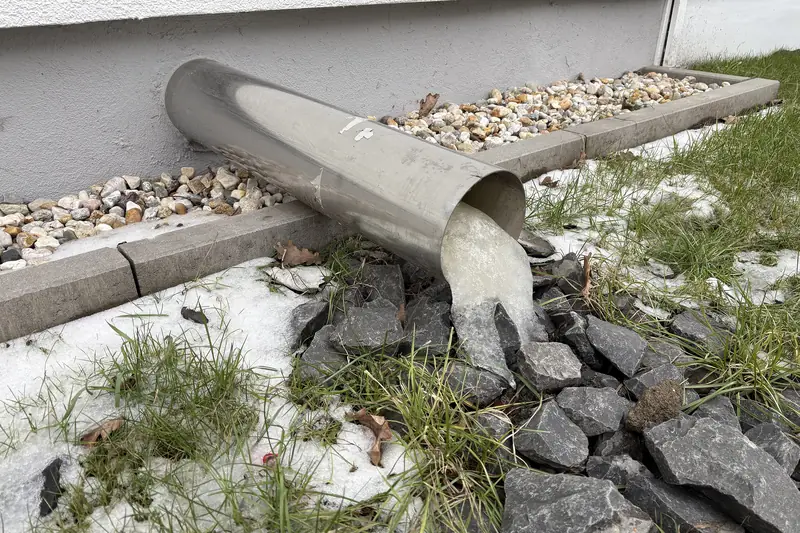
The water should land on your own lawn or garden at least 2 m from the foundation, sloping away from the house. That distance comes from the City's 2026 basement flooding infographic, which also says to "ensure redirected water does not negatively impact neighbouring properties."
Three limits apply under the City's rules:
- Away from the foundation. Water has to flow away from the walls. Chapter 681 (s. 681-11Q) says storm water must "not accumulate at or near the building."
- Not onto a neighbour. It must not negatively affect the neighbour's property.
- Not onto the sidewalk. It must not "flow directly onto a City sidewalk," where it can freeze.
| Destination | Allowed? | Source |
|---|---|---|
| Lawn or garden at least 2 m out, sloping away | Yes, the City's recommended outcome | City of Toronto, 2026 infographic |
| Rain barrel with overflow led away from the house | Only if the overflow also drains away under the same limits | Applies the City's general rules |
| Next to the foundation wall | No: water must not pool at the building | Municipal Code 681-11Q |
| Neighbour's yard | No | City of Toronto program page |
| Directly onto a City sidewalk | No | City of Toronto program page |
| Back into the City sewer | No, unless the City grants an exemption | Municipal Code 681-11S |
Grading matters as much as the extension. If the soil slopes toward the house, water will come back to the wall; the basement waterproofing cost guide covers grading and other low-cost fixes.
Who can get an exemption?
An exemption is available only where disconnecting a downspout would be "hazardous or not technically feasible," and the City expects owners to try alternatives first. Those include moving the downspout, regrading the eavestrough, or correcting the slope of the property.
To apply, an owner sends the City's Mandatory Downspout Disconnection Exemption Application with a sketch of the property. The City replies in writing, downspout by downspout. Chapter 681 leaves the decision to "the General Manager's sole discretion," and the General Manager can revoke an exemption if the application was misleading or the property changes.
The City decides each case; this guide cannot say whether a particular home will qualify.
Financial help for the work
The City reimburses labour and materials "up to a maximum of $500" for eligible owners. To qualify you must own a residential property in Toronto, have a combined household income of $50,000 or less, and be a low-income senior (65 or older, or in certain pension or benefit categories from age 50) or a person with a disability receiving disability benefits. Apply within one year of finishing the work, with dated invoices or receipts, before-and-after photos and recent Notices of Assessment.
What mistakes cause problems after disconnection?
The most common mistakes after downspout disconnection are short extensions, open standpipes and water sent somewhere it is not allowed. Each can undo the point of the work.
- Leaving the standpipe open. Without a cap, leaves and water still reach the sewer, and sewer gas or animals can come up.
- Extensions that are too short. An elbow with no extension drops water right at the wall; aim for at least 2 m.
- Draining onto a driveway that slopes to a garage or a neighbour. It can break the neighbour rule and create ice.
- Ignoring winter. Extensions and outlets freeze; clear ice and snow so meltwater has somewhere to go. The frozen pipes guide covers other cold-weather problems.
- Forgetting the sump discharge. The City's infographic applies the same 2 m rule to sump pump discharge pipes (see the sump pump guide).
- Skipping maintenance. The IBC advises cleaning downspouts and eavestroughs "at least once a year."
Downspout disconnection figures
- 23 cmWhere to cut, measured up from the sewer standpipeCity of Toronto, modified July 22, 2025
- 2 mHow far the City says roof water should land from the houseCity of Toronto, Be ready before a basement flood (2026)
- $500Most the City reimburses eligible low-income seniors and people with a disabilityCity of Toronto, modified July 22, 2025
- $50,000Household income limit for that helpCity of Toronto, modified July 22, 2025
How we put this page together
What this guide relies on: the City of Toronto's Mandatory Downspout Disconnection page (modified July 22, 2025), Municipal Code Chapter 681, Sewers, the City's 2026 basement flooding infographic, the subsidy program page (modified June 18, 2026), Ontario Building Code Article 9.26.18.2 and the Insurance Bureau of Canada, checked October 2026. It does not give legal opinions on individual properties or a fine amount for downspouts, because the by-law's penalties are general to the whole chapter; the City decides exemptions.
Common questions
Is there a fine for not disconnecting downspouts in Toronto?
Chapter 681 sets general penalties for offences under the whole sewer by-law, but the City's downspout page does not list a downspout-specific fine. The practical consequence most owners meet is losing eligibility for the basement flooding subsidy.
Does a rental property owner or the tenant have to disconnect?
The City's rule is on property owners. Tenants who see a downspout still running into a standpipe can raise it with the landlord or property manager.
Can downspouts drain into a rain barrel?
A rain barrel can collect roof water, but its overflow still has to drain away from the foundation and not onto a neighbour or the sidewalk. Empty and disconnect it before freezing weather.
Does the 2 m rule apply to semi-detached and row houses?
The City's advice is the same for every house, but narrow side yards can make 2 m hard to reach. Moving the downspout to another corner or regrading are the alternatives the City expects owners to try before asking for an exemption.
Does a downspout that already drains to the lawn need any work?
No. The rule targets downspouts connected to the City's sewer system. If yours already discharges onto the ground away from the house, check that the old standpipe is capped.
Does disconnecting downspouts help with the basement flooding subsidy?
Yes, it is a condition. The City pays for eligible devices only where downspouts are disconnected or an exemption has been granted, so do it before applying for a backwater valve or sump pump subsidy.
More on keeping water out
More help: see our Toronto home water and plumbing guide.