
Basement flooding
Toronto Basement Flooding Protection Subsidy Program, Explained
The Basement Flooding Protection Subsidy Program pays 80% of the invoiced cost of approved flood-protection work, up to $6,650 per Toronto property for work done on or after November 12, 2025.
On this page
Key takeaways
- For work completed on or after November 12, 2025, the City of Toronto pays 80% of the invoiced cost up to $6,650 per property (page modified June 18, 2026).
- Backwater valves get up to $1,600 each, for a maximum of two; a sump pump gets up to $2,250; a sump pump battery backup up to $300.
- Two items are new in 2026: a one-time home plumbing assessment (up to $500) and the battery backup subsidy, announced in an April 28, 2026 City news release.
- Applications under the new amounts opened May 1, 2026, and you now have two years after the work to apply (one year for work before November 12, 2025).
- Each contractor and subcontractor needs a current Toronto business licence, and your downspouts must be disconnected, or the application is refused.
- Toronto Water staff estimated that installing a backwater valve averages about $3,800 (CAD) on the open market in an October 2025 report.
The program in numbers (as of October 2026)
- $6,650Maximum subsidy per property for work on or after Nov 12, 2025City of Toronto
- $3,400Old per-property maximum before the 2026 expansionCity of Toronto news release, Apr 28, 2026
- 59,173Applications received from 2007 to July 2025Toronto Water staff report, Oct 2025
- 41%Share of invoiced costs the subsidy covered so far in 2025, before the increaseToronto Water staff report, Oct 2025
What does the basement flooding protection subsidy program cover?
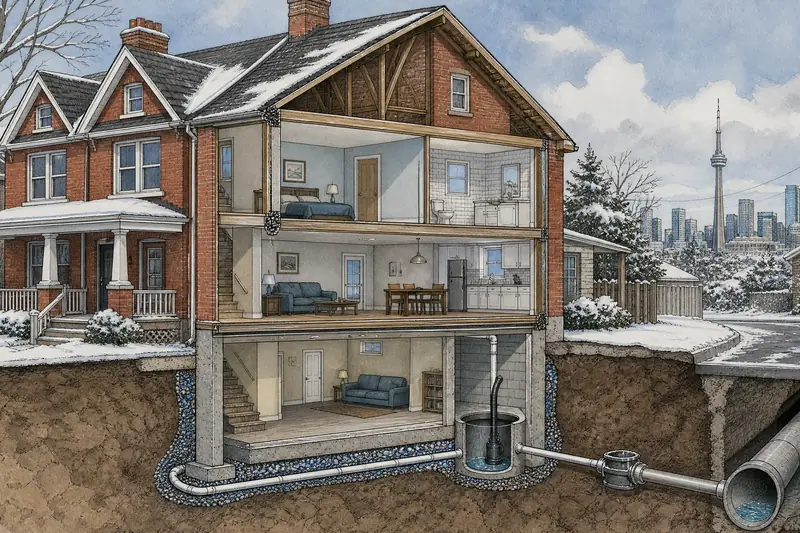
The program pays part of the cost of five kinds of work that help isolate a house from the City sewer: a home plumbing assessment, backwater valves, a sump pump, a sump pump battery backup, and severing and capping the foundation drain. Each item is paid at 80% of the invoiced cost up to its own cap, and each property has a lifetime maximum for each type of work, according to the City's program page.
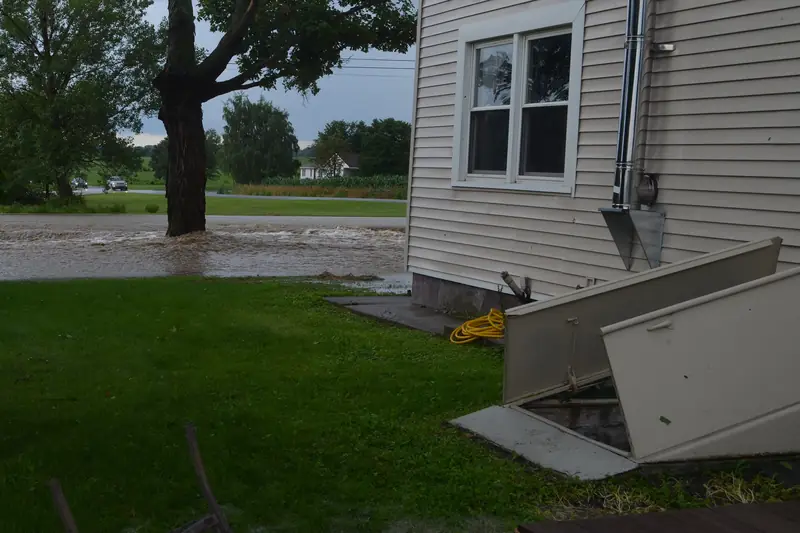
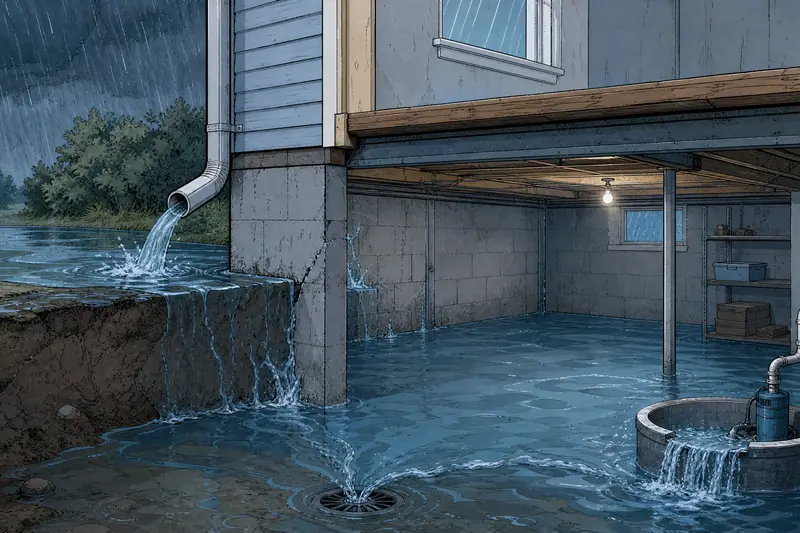
The City describes the goal as reducing the risk of sewer water and stormwater entering basements during heavy rain. A Toronto Water staff report from October 2025 notes that July and August 2024 storms flooded basements in more than one thousand Toronto properties, which led Council to review and expand the program.
Some related work is not on the list. Disconnecting downspouts is required to qualify but is not itself subsidized, and general basement waterproofing or weeping tile replacement is not a subsidized item; only foundation drain severance and capping is.
How much can you get for each device?
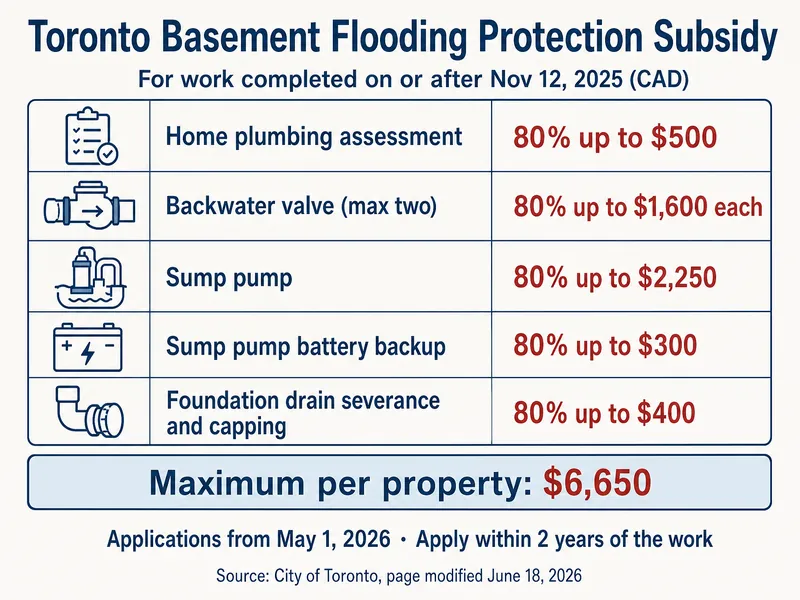
Each device has its own cap, and the payment is 80% of what you were invoiced or the cap, whichever is lower. The table below shows the amounts for work completed on or after November 12, 2025, beside the older amounts that still apply to earlier work.
| Item | Work on or after Nov 12, 2025 | Work before Nov 12, 2025 |
|---|---|---|
| Home plumbing assessment | 80% up to $500, one time | Not offered |
| Backwater valve | 80% up to $1,600 per valve, two maximum | 80% up to $1,250, one valve |
| Sump pump | 80% up to $2,250, one pump | 80% up to $1,750 |
| Sump pump battery backup | 80% up to $300 | Not offered |
| Foundation drain severance and capping | 80% up to $400 | 80% up to $400 |
| Maximum per property | $6,650 | $3,400 |
The arithmetic matters more than the cap. A $1,500 backwater valve invoice earns $1,200 (80%), not $1,600. Take the City's own average figure of $3,800: 80% of it is $3,040, more than the cap allows, so the City pays $1,600 and $2,200 is left for the homeowner. The backwater valve installation cost and sump pump installation cost guides walk through more examples.
Who qualifies for the subsidy?
You qualify if you are the registered owner of a single-family house, duplex, triplex or fourplex in Toronto and you meet every condition the City lists. The program page sets these out:
- Downspouts must be disconnected from the City sewer, or you must hold a City exemption. Disconnection is mandatory across Toronto anyway; see the downspout disconnection guide.
- Paved areas in the front yard, including parking pads, must meet the Zoning By-law.
- Whoever does the work, subcontractors included, needs a current Toronto business licence at the time of the job.
- You cannot owe the City outstanding taxes or other debts when the application is processed.
Funding is first-come, first-served and depends on the budget City Council approves each year. The City states plainly that submitting an application does not ensure a subsidy, so keep that in mind before booking work on the assumption of a payment.
How do you apply for the basement flooding subsidy?
You apply online after the work is finished and paid for, within two years of installing each device. For work done before November 12, 2025, the window is one year and the older amounts apply.
The usual order is: get any permit first (a backwater valve needs one), have the work done by licensed firms, pass the City inspection where one is required, pay the invoice in full, then submit the online application with your documents. The City says processing can take up to 10 weeks, incomplete applications are not processed, and refusals are sent by email.
Before hiring, check that the firm is licensed. The City issues Plumbing Contractor and Drain Contractor licences, and individual plumbers can be looked up on the Skilled Trades Ontario public register. The plumber cost guide explains what those licences mean for a quote.
What paperwork and permits does the program need?
Every application needs original electronic invoices from each contractor and subcontractor, showing their names and addresses, the property address, the work date, an itemized cost breakdown and a total marked "paid in full". Some items need more:
- Backwater valve: a City building permit, an inspection after installation (do not cover the valve before it passes), and consent for City staff to access the property and take photos or video. The standalone drain permit is listed at $38.67 per valve from January 1, 2026, though the City's fee schedule also charges a $214.79 minimum for all work, so check the amount with Toronto Building. No plans are needed for one- and two-unit houses.
- Sump pump: photos of the pump and its exterior discharge pipe, taken after installation. No building permit is needed for a sump pump.
- Battery backup: if it goes in with a sump pump, the contractor must list each component as a separate line on the invoice.
- Home plumbing assessment: the City's Home Plumbing Assessment Form, completed by your licensed plumber. You do not have to carry out the plumber's recommendations to receive this subsidy.
The plumbing permit guide covers how Toronto Building permits and inspections work in general.
What changed in the 2026 subsidy program?
The amounts went up and the scope widened. The City's April 28, 2026 release says the per-property maximum rose from up to $3,400 to $6,650, starting with applications on May 1, 2026, for work completed on or after November 12, 2025.
- The backwater valve and sump pump caps rose 28%, to $1,600 and $2,250.
- A second backwater valve is now eligible, aimed at homes with more than one sewer connection. The staff report gives the example of houses built in the 1950s and 1960s with a storm connection as well as a sanitary one.
- Battery backup power for a sump pump is new, including retrofits on a pump that already received a subsidy. Only systems permanently connected to the pump qualify; generators and portable units do not.
- The home plumbing assessment is new.
- The application window doubled from one year to two.
Many older web pages still quote the $1,250 valve cap and $3,400 total. Those were correct before November 12, 2025, but they are not the current amounts. The staff report explains the reason for the change: average costs of eligible work rose about 19% since 2013, and the subsidy's share of invoices fell from over 60% in the program's early years to 41% in 2025. Staff expected the new caps to cover about 53% of typical costs.
How we put this page together
This guide is based on the City of Toronto's Basement Flooding Protection Subsidy Program page (modified June 18, 2026), the City's April 28, 2026 news release, the Toronto Water staff report "Enhancing the BFPSP" (October 22, 2025), the backwater valve permit page (modified July 14, 2026) and the City's 2026 basement flooding infographic, all checked in October 2026. Amounts are in Canadian dollars. Contractor price lists and forum posts were left out; the only installation cost figure used is the City's own $3,800 average. Program rules can change, so confirm on the City page before you apply.
Common questions
Can tenants apply for the basement flooding subsidy?
No. The City requires the applicant to be the registered owner of the property. A tenant who wants protection installed would need the owner to arrange the work and apply.
Do condos or buildings with five or more units qualify?
The program lists single-family houses, duplexes, triplexes and fourplexes only. Larger residential buildings are not on that list.
My backwater valve was subsidized years ago. Is a second one eligible now?
Yes, the 2026 changes let previously approved applicants apply for a second valve, up to the two-valve lifetime maximum. A second valve is mainly for homes with more than one sewer connection, so ask your plumber whether your house has one.
Does do-it-yourself installation qualify for the subsidy?
The City pays only against invoices from firms with a current Toronto business licence, and refuses funding otherwise. Do-it-yourself work does not meet that condition.
Does the plumbing assessment have to lead to more work?
No. The City says you do not have to act on the plumber's recommendations to receive the assessment subsidy, which is 80% of the invoice up to $500, once per property.
What if my work was finished in October 2025?
Work completed before November 12, 2025 falls under the older amounts ($1,250 valve, $1,750 sump pump, $400 severance) and must be submitted within one year of the work.
Is there separate help for disconnecting downspouts?
Disconnection is not part of this subsidy. The City has a separate reimbursement of up to $500 for eligible low-income seniors and persons with a disability, described on its mandatory downspout disconnection page.
Related guides
More help: see our guide to water and plumbing in Toronto homes.