
Lead & old pipes
Kitec Plumbing: How to Identify It and What to Do
Kitec plumbing is a layered plastic-and-aluminium water pipe, usually orange for hot and blue for cold, typically installed between 1995 and 2008; its class-action settlement closed to claims on January 9, 2020.
On this page
Key takeaways
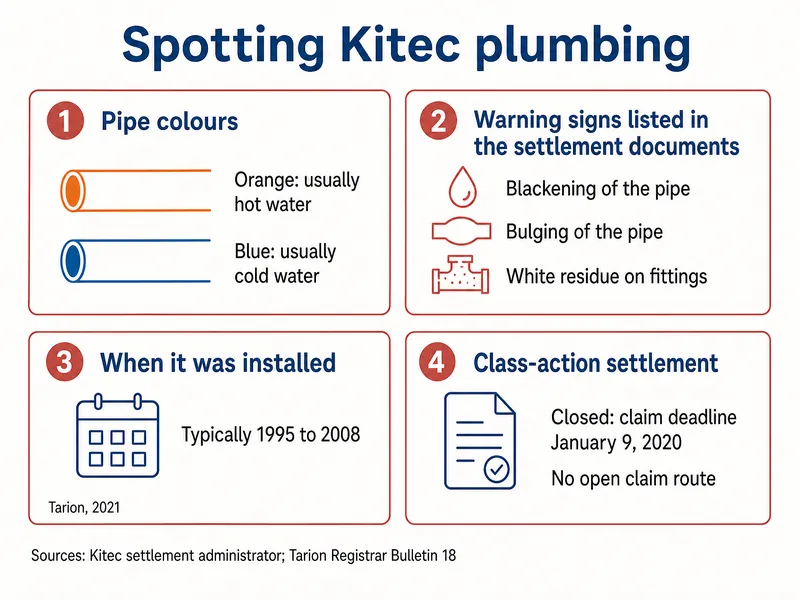
- Kitec pipe is "typically blue" for cold water and "orange" for hot water, according to the settlement administrator's FAQ.
- Tarion's Registrar Bulletin 18 (2021) says Kitec was "typically installed between 1995 and 2008" (Tarion).
- The settlement documents list three warning signs: blackening of the pipe, bulging of the pipe and white residue on fittings.
- The US$125 million class-action settlement is closed: the claim deadline was January 9, 2020, and the administrator reported on July 9, 2025 that payments had been issued and the stale date had passed.
- The same system was sold under eight other names, including PlumbBetter, IPEX AQUA, WarmRite and XPA.
- Replacing water piping usually counts as modifying a plumbing system, which needs a City of Toronto building permit (minimum fee $214.79 in 2026).
Kitec in numbers
- 1995–2008Years Kitec was typically installedTarion, Registrar Bulletin 18 (2021)
- Jan 9, 2020Claim deadline of the Kitec class-action settlement (now closed)Kitec settlement administrator
- US$125MSettlement fund, before lawyers' fees and costsKitec settlement administrator
- 3Warning signs listed: blackened pipe, bulging pipe, white residue on fittingsKitec settlement administrator
What is Kitec plumbing?
Kitec plumbing is a composite water-piping system made of plastic layers around a thin aluminium core, with its own fittings and valves. The settlement administrator's frequently asked questions describe the system as "PEX-AL-PEX, PE-AL-PE, PERT-AL-PERT, PEX pipe, valves, fittings" and related components. The "AL" in those names stands for the aluminium layer.
The name on the pipe may not be "Kitec". The same FAQ lists the brand names it was sold under: Kitec, PlumbBetter, IPEX AQUA, WarmRite, Kitec XPA, AmbioComfort, XPA, KERR Controls and Plomberie Améliorée. If any of those names is printed on pipe in your home, treat it as part of the Kitec family.
Kitec was the subject of a class-action lawsuit heard in the United States District Court for the Northern District of Texas, the Ontario Superior Court of Justice and the Superior Court of Quebec. The courts approved a settlement fund of US$125 million, less lawyers' fees and costs. That process is now finished, which matters for what a Toronto owner can do today (see below).
How do you identify Kitec pipe?
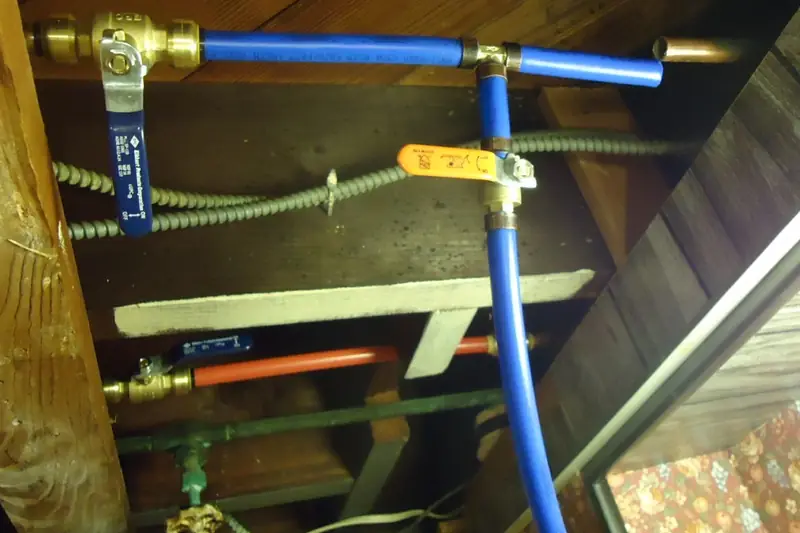
The quickest way to identify Kitec pipe is by colour and printing: the settlement FAQ says the pipe is typically blue for cold water and orange for hot water. The administrator's photo page also shows pipe in other colours, so colour alone is a clue, not proof. Read the printing along the pipe for one of the brand names above.
Good places to look in a Toronto house or condo:
- Beside the water heater, where hot and cold lines are exposed.
- At the main shut-off valve near the water meter (the shut-off guide shows where it usually is).
- Under kitchen and bathroom sinks, where supply lines leave the wall.
- In an unfinished basement ceiling or a condo suite's mechanical closet.
- At any boiler or manifold, since the system includes valves and fittings as well as pipe.
Bright orange and blue pipe on its own is not enough. Modern PEX pipe also comes in red and blue, and it is a different product. If the printing is worn or hidden, a licensed plumber or a home inspector can confirm the material.
What warning signs do the settlement documents list?
The settlement documents list three things to look for: "a blackening of the pipe and/or a bulging of the pipe", and "a buildup of white residue on the outside of the fitting". Those signs come from the administrator's FAQ, which was written so that owners could tell whether their system was affected.
This guide does not explain why the pipe or fittings fail. Contractor websites offer a chemical explanation, but no government or regulator page checked for this guide states one, so it is left out. What matters to a homeowner is the visible list above, and whether there is any leak, stain or drip near a fitting.
If you see any of the three signs, or water near a fitting, shut off the water at the main valve and get the system looked at by a licensed plumber. A leak in a finished ceiling or wall can spread before it shows. The low water pressure guide covers what to check when a supply problem shows up as weak flow instead of a drip.
Which Toronto homes have Kitec?
Toronto homes and condos built or renovated between about 1995 and 2008 are the ones most likely to have Kitec. That range comes from Tarion, Ontario's new-home warranty regulator, whose Registrar Bulletin 18 tells builders converting buildings to condos to "check for Kitec piping", "typically installed between 1995 and 2008".
The years are a guide, not a rule. A house built in 1925 may have had Kitec added during a renovation in 2003, and a 2000s condo tower may have none. Your home inspection report, the original builder's documents or the condo corporation's reserve fund study may name the pipe material.
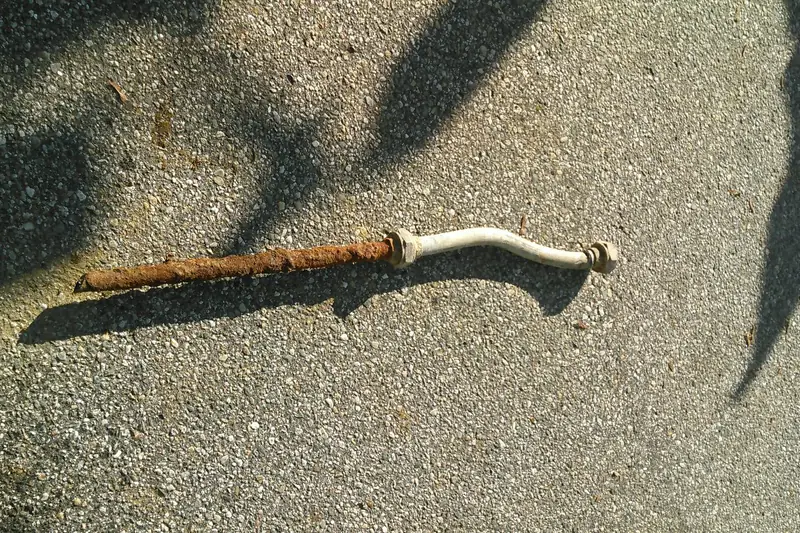
Older Toronto houses are more likely to have other pipe problems first. Homes built before the mid-1950s may have a lead water service pipe, and galvanized steel was common inside homes for decades. The polybutylene and galvanized pipe guide covers those materials.
| Material | How to recognise it | Where the official guidance is |
|---|---|---|
| Kitec (PEX-AL-PEX and related) | Orange (hot) and blue (cold) pipe, printed brand names | Kitec settlement administrator FAQ; Tarion Bulletin 18 |
| Lead service pipe | Grey, scratches easily, does not sound hollow when tapped | City of Toronto, Lead and Drinking Water |
| Galvanized steel | Grey threaded steel pipe | Health Canada, lead corrosion guidance (2025) |
| PEX (modern) | Red, blue or white plastic pipe, no aluminium layer | Maker installation manuals |
Do insurers care about Kitec plumbing?
Some insurers may ask about pipe materials, but no insurer rule or regulator statement on Kitec was found for this guide. The safest step is to ask your own insurer or broker whether your policy or renewal asks about Kitec, and to read your policy wording on water damage.
The Insurance Bureau of Canada's water damage guidance is a useful reminder that coverage varies by policy and by type of water damage. Keep any record of a Kitec inspection or replacement, including the permit and invoices, because an insurer or buyer may ask for it.
If you are buying a home, ask the seller whether the property has Kitec and whether it has been replaced, and ask the home inspector to look for it. In a condo, ask the property manager whether the building has a replacement program for the common piping.
Can you still claim from the Kitec settlement?
No: the Kitec class-action settlement is closed. The administrator's website says "The claims deadline for this action has passed", gives the deadline as January 9, 2020, and reports on July 9, 2025 that "Settlement payments have been issued and the stale date has passed."
That means a Toronto owner who finds Kitec today pays for any replacement themselves. Watch for anyone who says they can file a Kitec claim for you; the official site lists no open claim route.
Should you replace Kitec now?
Replacing Kitec is a decision each owner makes with a licensed plumber, based on what is found. If you see blackened or bulging pipe, white residue at fittings or any leak, have it checked promptly. If the system looks clean, you can plan replacement on your own timeline, for example during a renovation when walls are already open.
Before work starts, check that the plumber holds a Certificate of Qualification on the Skilled Trades Ontario Public Register, and that the business holds a City of Toronto Plumbing Contractor licence. A repipe normally needs a building permit, since the City's 311 permit list includes work to "install or modify" plumbing systems. The Kitec replacement cost guide explains what drives the price and how to compare written quotes.
How we put this page together
Checked for this guide in October 2026: the Kitec settlement administrator's FAQ, home page and photo page; Tarion Registrar Bulletin 18 (2021); the City of Toronto 311 permit article (modified July 21, 2026); and Skilled Trades Ontario's plumber trade page. Left out: any explanation of the failure chemistry (not stated by a government or regulator source), installation years other than Tarion's, any insurer rule on Kitec, contractor price lists and forum anecdotes.
Common questions
Is all orange and blue plastic pipe Kitec?
No. Modern PEX pipe also comes in red and blue and is a different product. Kitec has an aluminium layer and printed brand names such as Kitec, PlumbBetter, IPEX AQUA, WarmRite or XPA; read the printing before deciding.
Was Kitec used in Toronto condos?
Tarion's bulletin for condo conversion projects tells builders to check for it, which shows it turns up in multi-unit buildings. Ask your property manager whether the building's common piping or your suite's piping is Kitec and whether there is a replacement plan.
Does the City of Toronto test for Kitec?
No City program inspects private piping for Kitec. The City's water programs deal with lead service pipes and the City-owned part of the service; the pipes inside your home are the owner's responsibility.
Did the settlement pay for replacement?
The settlement paid approved claims from a US$125 million fund, less fees and costs. Claims closed on January 9, 2020, and the administrator reported in July 2025 that payments had been issued and the stale date had passed.
What should be done if Kitec is leaking?
Close the main shut-off valve, turn off power to anything near the water, and call a licensed plumber. Photograph the pipe and any damage, and contact your insurer about the water damage.
Does a home inspection always find Kitec?
Not always. Much of the piping is hidden in walls and ceilings, so an inspector can only judge what is visible, usually near the water heater, the main valve and under sinks.
Does replacing Kitec need a permit in Toronto?
Replacing water piping is generally a change to the plumbing system, which the City lists as needing a building permit. Toronto Building decides for each project, and the plumber or the owner can apply.
More on old pipes
More help: see our Toronto water and plumbing guide.